
It is a familiar refrain any time a hosepipe ban is mentioned.
Surely Ireland, with its ample rainfall and general precipitation, should have plenty of water on hand to keep those gardens alive and those cars washed for a few weeks in the summer.
But no. As the past few weeks of exceptionally dry weather begin to bite, several counties find themselves again told to ration supply.
Dublin and parts of Kildare, Meath, Wicklow, Tipperary and Wexford will have to leave the outside taps untouched until August 26th. Night-time restrictions are in place in other areas the length of the country.
READ MORE




The need to conserve water over this period is so urgent that Uisce Éireann has set up a hotline so that people can report any breaches of the ban. A fine of €125 will be applied to each offence – and if the matter were to reach court a fine of €5,000 could be imposed on conviction.
But where does all our water go?
“Ireland is a bit unusual compared to other countries,” says Matt Crowe, chair of the Water Forum, the independent advisory body that advises the Government on water policy.
“We have a very large number of small supplies and a very dispersed population. We are mostly dependent on rivers – we do take a certain amount from groundwater – but most of our drinking comes from surface water.
“When the weather gets better the level of water reduces and the amount of water available for extraction into drinking water plants reduces.
“Some places would be more resilient than others – but the places that are less resilient are more likely to see water conservation measures in place until it starts to rain again.”
Then there are the leaks.
According to the state-owned water utility Uisce Éireann, 38 per cent of our drinking water is lost before it can get to the taps.
It pins the blame on the past, saying there has been a “recognised legacy of underinvestment” in Ireland’s water services over many decades.
It paints a picture of a system that, in some cases, has only survived with the help of “local heroes” such as local authority caretakers who have used “ingenuity” to keep them running despite this lack of investment.
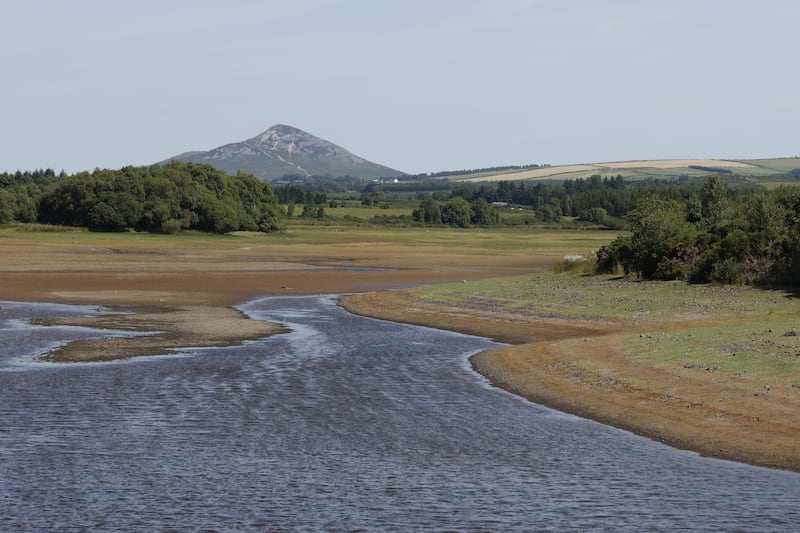
The combination of these factors leads to the conservation notices like that issued last week.
Jenny Lawler of the Dublin City University Water Institute says that while the utility has made some progress on reducing leaks, its performance to date has been less than perfect.
Earlier this month it was fined €31 million by the Commission for Regulation of Utilities for failing to hit targets relating to leaks and debt management.
“It was quite a large fine,” says Lawler.
“When the public looks at that – and at the same time the fact that there are now penalties for breaking hosepipe bans – that is something that can be difficult for people to swallow”.
“People are going to question whether Uisce Éireann is performing as it should.”
Lawler points out that the problems that have led to the hosepipe ban are not going to be fixed in a summer.
[ What can’t I do under a hosepipe ban and how often are people fined or convicted?Opens in new window ]
Instead, Uisce Éireann has considerable work to do over the next 25 years.
The utility’s Water Services Strategic Plan 2050 aims to equip the country with a water system that addresses all the historic and contemporary failings – while adjusting to a growing population and a changing climate.
The Central Statistics Office has forecast that the population of the State, which stood at close to 5.2 million in 2022, could grow to between 5.77 and 6.4 million by the year 2042.
It predicts that population growth will be highest in what is known as the mideast – in the counties of Kildare, Louth, Meath and Wicklow. This will mean new housing and access to a reliable water supply.
Key is the Shannon-Dublin pipeline project. It would transport hundreds of millions of litres of water per day from the river Shannon through a 170km pipeline that would service the eastern and midlands regions.
It is expected to cost between €4.6 billion and €5.9 billion.
The project is currently before An Coimisiún Pleanála, with a decision on its future due over the next twelve months..
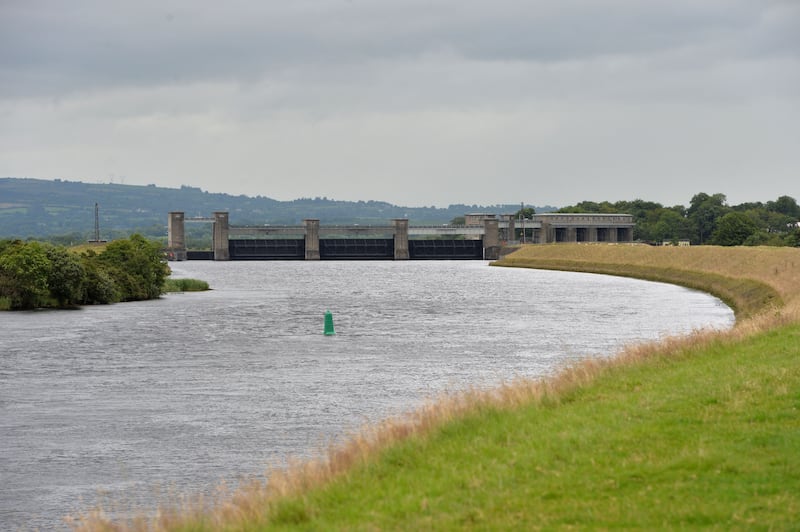
Objectors say it is an environmentally risky and outdated idea, but business and industry groups say it needs to be built as quickly as possible. Taoiseach Michaél Martin has said the plan was “an imperative”.
Lawler says the pausing of the Shannon project might not be a bad thing if it allows for a consideration of the technological advances that have been made since it got the original go-ahead.
“If you look at the plans for that they are based on a very old analysis of the system,” she says.
“The two major options were either moving water up from the Shannon – or putting in desalination plants close to Dublin. The technology on desalination has significantly changed over the last two decades.”
Desalination is the process through which salt water is converted to fresh water.
Lawler, who worked in Qatar and saw at first hand the huge desalination projects that supply the Gulf countries, says the technology is now much cheaper – and could potentially address environmental concerns relating to the river Shannon’s Parteen Basin. She notes that the UK has also moved increasingly towards desalination as a solution to its drinking water problems.
[ Dublin City Council curtails street cleaning to save waterOpens in new window ]
“If we look at the best available technology today, desalination may come out as the best option.”
Matt Crowe feels personally that the positioning of desalination plants near Dublin is an unlikely outcome to the process, but sees the merit in the idea.
Instead, he says, there needs to be a speedy buildout of the pipeline – if and when planning permission is finally granted.
“What we really want to see once the final decision is made is that it is implemented with a sense of urgency,” he says. “That as a country we crack on with it and get the job done”.
In addition to a growing population and climate change concerns, there have been worries recently about the pressures that may be exerted on the system by industry. Specifically, data centres and their requirement for water to keep servers cool.
Lawler says there needs to be a transparent planning process in which the data centre operators are clear about what sort of water based cooling systems they plan on using. She says that centres with evaporative cooling – where external water is added to a cooling system – should not be granted planning permission.
As for leaks, Crowe says the decision to have a single national body responsible for the water system has led to a material reduction in the amount of water being wasted in Ireland. The overall leakage rate in 2014 stood at close to 50 per cent, he notes, and recent years have seen it fall significantly.
“We are in a much better place now than we were 15 or 20 years ago – we have a national utility instead of over 30 local authorities”.
He does concede, however, that the proportion of water lost into the ground in Ireland still greatly exceeds that in many European countries.
The years ahead are going to involve “messy, dirty work,” he says.
“It will be very disruptive – and will involve digging up streets and changing mains.
“On the one hand we need to fix the leaks – that’s a long-term project. But on the other we need new and modern supply networks.”
As for the hosepipe ban, it is unlikely to be the last of its kind.


