

Marina Conway has what sounds like an enviable dilemma: a piece of land and freedom to use it as she likes.
“I have 19.5 acres I recently inherited in my great-grandmother’s home place,” she says.
Her land is close to the Mayo-Sligo border, a region of farms, bogs and plenty of examples of the former made from the latter.
Once grazed, now half wild, it has deer roaming through it, eating everything but the toughest growth, which limits planting options.
READ MORE


It is not suitable for forestry so would be unlikely to qualify for Government supports, which further restricts options for its use.
Conway could sell it, lease it, invite a neighbouring farmer to put livestock on it or sit on it in case the Government’s plan to encourage more one-off rural houses eventually unlocks some development potential in it.
But she really wants to do something for the common good.
“I am overwhelmed. I don’t know what to do,” she says. “And I work in the sector.”
There is irony in her situation. Conway is head of woodland for the nature restoration charity, Hometree.
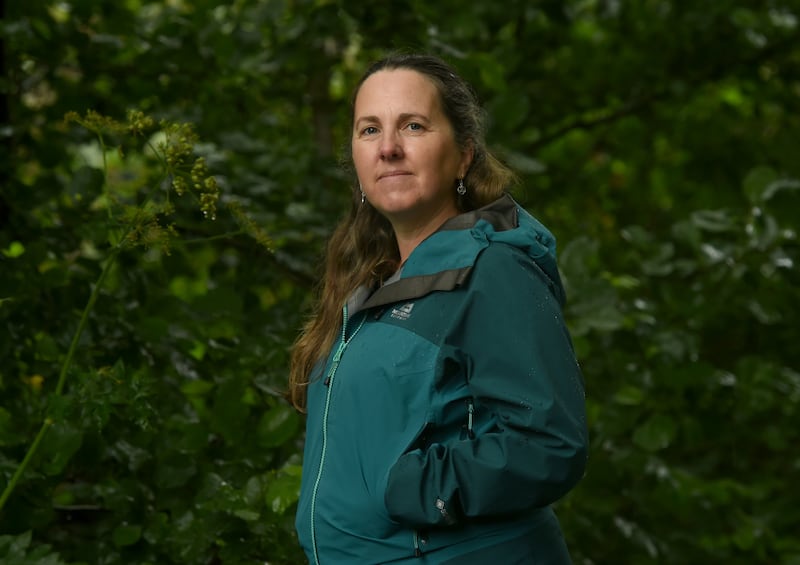
Her job is to find ways to support landowners and communities in creating new native woods on lands in search of fresh uses.
If deciding the future of 7.8 hectares (19.5 acres) is hard, imagine the challenge of drawing up a best-use plan for lands one million times bigger – such as the 7.1 million hectares that make up the Republic.
To do that, it would be necessary to first establish and assess the existing uses – an exercise begun in 2021 when the Government established the Land Use Review, which published its latest report last month.
To summarise the 600 pages of documents, we have made poor land use decisions.
The primary use is agriculture, which takes up 74 per cent of the country’s land.
Most of that, 4.4 million hectares, is cultivated grassland, meaning non–natural and heavily fertilised, for livestock. Most of the livestock are cattle, and 90 per cent of what they produce is exported.
By international standards, it is a uniquely high proportion of land to devote to one activity, but that is not necessarily a problem.
What is of concern, says the Land Use Review, is that this singular land use is hampering the achievement of key national objectives such as having clean water, reducing greenhouse gas emissions, saving our dwindling nature from obliteration and providing a good standard of living for all.
Agriculture is the main polluter of waterways, half of which fail to meet minimum environmental standards.
It is responsible for 38 per cent of national emissions – the largest of any sector.
It is the number one pressure on wildlife and natural habitats, 90 per cent of which are in poor condition. The review says 85 per cent, but the toll has risen since its data was collected.
[ Brown trout and eels dead in ‘significant’ fish kill on Dublin’s Tolka riverOpens in new window ]
And while agriculture is frequently presented as an economic success story, the reality for many working in it differs.
Around 47,000 of the country’s 135,000 farms are so small that they generated annual income of just €2,600-4,500 when last surveyed by Teagasc, the national farm advisory authority, in 2022.
Of the other 88,000 surveyed in 2025, only 54 per cent were categorised as “viable”, meaning able to support the household with income equivalent to at least the national minimum wage.
The rest were only capable of supporting the household alongside off-farm income, such as a spousal salary or a part-time job for the main farmer.
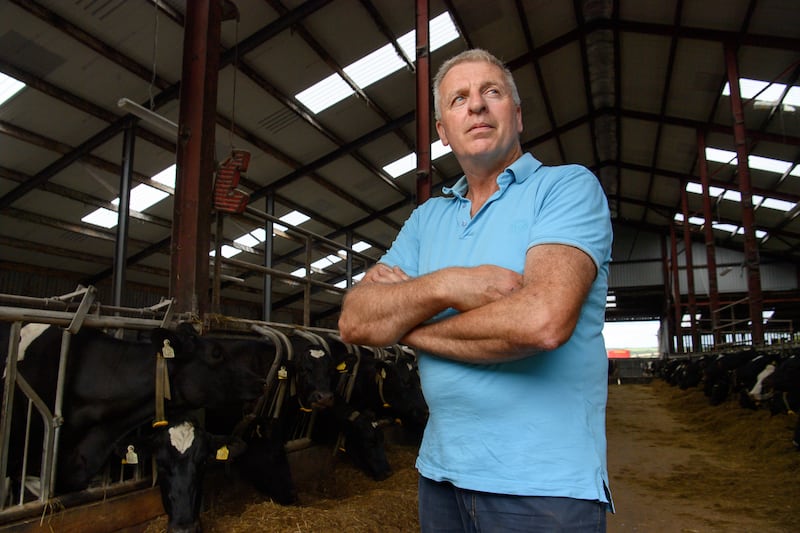
John Murphy bristles at how the viability of his profession is measured.
“The report quotes figures about viability, but those are very dangerous figures,” he says.
“You can say a farmer doesn’t make a lot of money, but he puts a lot of money in circulation within his local community.
“And he puts in more than money. His kids are in school in the community, his spouse works there, he might have a part-time job there.
“He’s part of the fabric of the community. Saying he’s not viable is a glib way of putting it.
“The naysayers would use that and say: ‘why not get rid of half those cows that are making no money and we’ll put trees there?’
“But the moment you put trees there, there is no more activity. The community goes quiet.”
Murphy, chairman of the Irish Farmers Association’s environment committee, is a dairy farmer near Dripsey village, which lies in the fertile Lee valley 20km west of Cork city.
Cattle farming dominates here, as it does across a county that has almost twice as many bovines as people.
That’s how Murphy wants it to stay, but the Land Use Review does not just raise questions about agriculture’s dominance of the landscape; it presents a giant-sized mathematical puzzle.
Government policy wants more of those rich soils given over to tillage because Ireland grows so few food crops that we import almost all we need, including the wheat we use to make “Irish” bread.
Another policy would like those same fields to grow “energy crops” to feed the nascent biomethane industry needed to produce renewable gas.
Yet another policy seeking a huge expansion into forestry.
Another wants to designate land for wind farms, like the handful that lie to the north and west of Dripsey.
And another is keen to encourage the installation of utility-scale solar arrays. Again, land is needed.
Government housing policy also has designs on the land as it aims to build at least 33,000 homes a year and allow more one-off homes in rural areas.
Other national policies require more hedgerow planting, extensive nature restoration and riparian buffer zones to protect waterways.
All these objectives combined require 336,400 hectares of land by 2030 – the equivalent of counties Dublin, Wicklow and half of Louth.
Policies to 2050 require another 400,000 hectares for forestry expansion alone, equivalent to counties Meath and Kildare.
Unless there is a plan to enlarge the country by way of a land reclamation project as big as that undertaken by the Netherlands, those 736,400 hectares will have to be found by dipping into the existing land bank.
[ Hundreds object to plans for Ireland’s largest new townOpens in new window ]
And the existing land bank – that which is not already built on, forested, under peatland restoration schemes or made up of sand dunes, mudflats, lakes, mountain rock or other natural features – is almost entirely taken up with farming.
Logic suggests that if those other policies are to be pursued, some of that grassland must be put to other uses and livestock numbers must be reduced.
Such suggestions are like self-lighting political dynamite sticks. Mere mention of them is enough to ignite an explosion of opposition.
So although the Land Use Review stresses “business as usual is not an option”, and warns “sustainable land use requires very significant change”, the Government published its findings with a disclaimer.
“It is not an articulation of Government policy or a new strategy in relation to land use, nor has it been adopted by Government,” the official statement said.
The report was, it said: “an important contribution to the national conversation on the optimal use of land in Ireland”.
Is there a way of making too many policy pieces fit an undersized land jigsaw?
Based on the Government’s current approach, Murphy doesn’t believe so. “They’re making plans for land that isn’t there,” he says.
Dermot Houlihan, chairman of the Association of Irish Forestry Consultants and owner of Timberland Forestry in Galway, also has doubts.
“The policy says we want more trees, but a lot of farmers have given up on the whole idea,” he says.
“It’s all of the rules. They are tied in knots with rules. Even getting approval to plant is difficult. We’ve had objections to broadleaf planting.”
Broadleaved or native deciduous trees generally have greater public acceptance than the more common commercial Sitka spruce that dominate forested lands, so hearing of objections may come as a surprise.
It’s a mindset, Houlihan says. “People see grassland as a natural native vegetation and want the open field kept.
“The reality is, if you left the field alone, there would be trees popping up everywhere because that’s the natural vegetation.
“The open field is drained and planted and reseeded continually with ryegrass [for livestock] with nitrogen fired on it a few times a year, which is not natural. And then everyone’s wondering why water quality is a problem.”
[ Solar power specialist Elgin secures almost €600m backing for British dealsOpens in new window ]
A total of 2,527 hectares of new forest was planted last year, the highest annual figure since 2019, but a long way short of the 8,000 hectares targeted annually for this decade.
Houlihan is clear about the likelihood of achieving that target, and the follow-up target of 16,000 hectares per year to 2050. “Not a chance,” he says.
Murphy agrees, and is equally sceptical of the targets for biomethane production.
Anaerobic digesters produce low-emission gas from food, animal and plant waste and specially grown energy crops such as maize, cereals and grass.
The national target is to have 200 of them by 2030, supported by 130,000 hectares of energy crops, but there are only around 20 in operation, and Murphy says farmers will not allocate land to grow for an expanded industry without attractive incentives.
He is less confident in the sector’s ability to resist the growth of solar, however.
“Solar is the big one. It’s taking top-class farmland, and there is a conflict there, no doubt about it,” he says.
It is a sensitive issue in rural areas as it is farmers who are doing the deals that enable solar developers to seek planning for installations often covering hundreds of hectares.
Objectors often claim that the best of essential food-producing land is being sacrificed, putting food security at risk.

Brian Keville, managing director of MKO planning consultants, which works extensively on renewable energy projects, rejects that argument.
“You have to ask, how much agricultural output does this country need and how much agricultural output is intended for foreign markets?” he says.
“We could certainly accommodate all of our renewable energy ambitions and not have any risk to food security in this country.”
Keville says enough farmers are willing to make deals so that securing land for renewable projects – the Land Use Review calculates the need at 15,000 hectares for wind farms and 14,000 hectares for solar by 2030 – will not be difficult.
“In my experience, most landowners are commercial in nature. They have to be, because in most cases they make a living from that land.
“Whatever the ask, they will balance the commercial reality that is the offer being made versus the level of inconvenience versus the level of public perception around whatever a project might be, so a lot of the time it comes down to the offer that is being tabled.”
One commercial reality is that competition for a scarce resource drives up its price and Frank Harrington, a lecturer in real estate at Technological University Dublin, has tracked that trend in land sales.
His latest research, from April this year, shows the price of good quality agricultural land rose 7 per cent last year and poor quality land by 5 per cent.
“There are a lot of competing interests at play and a very small amount of land coming on to the market,” he says.
“Those factors are pushing prices up, which has a knock-on effect on production costs and food prices.
“We have all these targets too – for solar, forestry, biogas – which will create more competition.
“There seems to be a need for more joined-up thinking across the various sectors on the impact of their various targets.”
Commercial realities can also make land use for the common good – such as for climate action or nature restoration – all the harder to achieve, says Marina Conway.
“We have a productivity versus environment mindset. They’re being pitched as one or the other.
“But we are nothing without a healthy environment. They can’t be pitted against each other. They have to be on an equal footing.”
That means providing equal incentives and supports, she says. Otherwise, what she terms “target fatigue” will set in, with no shortage of national targets and ambitions but little or no progress towards achieving them.
“The key is creating clear, rewarding ways for everyone to play a direct role in nature restoration. We need to turn national goals into accessible, community-led action.”
[ Dairy firm suspended over pollution is allowed to restart operationsOpens in new window ]
The Land Use Review agrees on the need to better incentivise more sustainable land use choices.
It says impediments to change include “high upfront costs, insufficient financial incentives to offset costs of transitioning, and high opportunity costs of switching from traditional practices to more sustainable alternatives”.
It also notes that only 8 per cent of land is in public ownership, so that’s a lot of private landowners with deep attachment to their land to try to convince to change their ways.
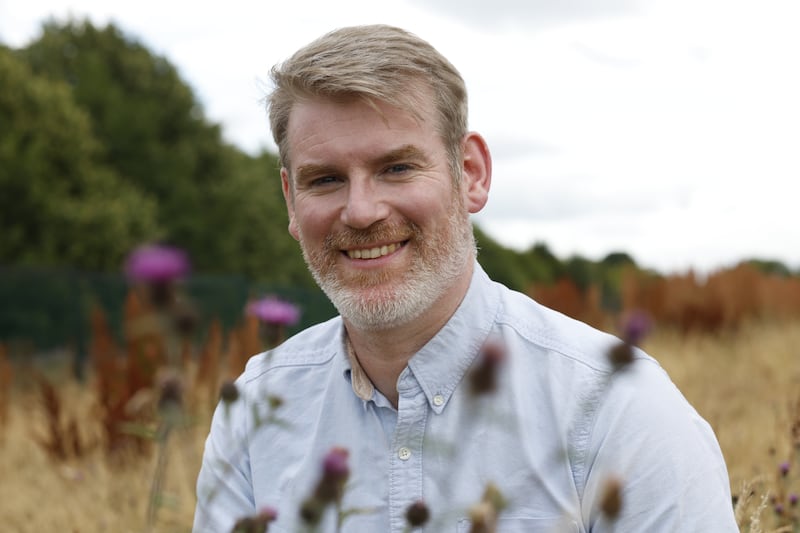
Fintan Kelly, senior land use officer with the Irish Environmental Network, says fear of change seems an even greater impediment.
He was involved in the stakeholder engagement element of the review, and is disappointed that it failed to set out radical ideas to transform land use.
“It is extremely clear that the way we currently manage our land is failing across the board – emissions, water quality, biodiversity, wealth distribution, food security.
“If that message comes out of the review – that we need fundamental changes to how we manage land – that’s a positive.
“But it doesn’t take the next step and show how to tackle the underlying problem.”
The review sets out four alternative land use models but three of them remain firmly committed to maintaining high cattle numbers with priority given to dairy – the most emissions-intensive and polluting, but also most profitable, farming model.
Just one scenario envisages a sizeable reduction in cattle numbers, freeing land for more sustainable uses, but stresses farmers would have to be paid for these alternative services.
Kelly fears that model was included to appease the environmental sector rather than with any real intention of trying to follow it.
He is also concerned that the priority placed on dairy means the generally smaller, lower-income beef farmers would be expected to carry the burden of any proposed changes while their larger, wealthier counterparts continue business as usual.
“It’s like we need to protect dairy at all costs,” he says. Those costs, he says, are too high.
He became a father in early summer and was quickly faced with the challenge of keeping a newborn cool in the baking temperatures while watching lands burn at home and abroad.
[ Met Éireann says July was among ‘hottest, driest and sunniest months on record’Opens in new window ]
Future generations are very much on his mind.
“We need to reduce emissions, and that means changing land use, but I’m not convinced we would have seen this report published at all if it hadn’t been so far advanced when the Government changed last year.”
John Murphy doesn’t rule out Ireland’s land use jigsaw being rearranged in future.
“There might be fewer farmers in future. The younger generation are settling down later, and they might have the land but not want to farm it,” he says.
“So it could change, but at the moment, we have a unique form of farming, and we shouldn’t be afraid to tell our story.”
But while cautious in its recommendations, the findings of the Land Use Review clearly show that Ireland must prepare to write a new one.


