

There has been a quiet revolution in how we manage our green spaces in the last 10 years or so. And while there are still some carefully manicured lawns (now a burnt yellow following the summer we have had) in private and public gardens, most parks, civic green spaces, roadway margins and shared suburban greens have areas left for native wildflowers and plants to grow freely and undisturbed.
The seed-bearing grasses blowing gently in the wind in what was previously neatly cut green grass at the front entrance to Trinity College Dublin shouts loudest of all about how we are giving back space to nature.
Much credit for this transformation from celebrating neatness to embracing wildness must go to Dr Úna Fitzpatrick, chief scientific officer with the National Biodiversity Data Centre (NBDC) and Prof Jane Stout, professor of botany at Trinity.
The two are the founders of the All-Ireland Pollinator Plan, which was started in 2015 and has blossomed over the years through the voluntary efforts of Tidy Towns groups, sports clubs, resident associations and faith communities.
READ MORE


What started as a low-budget, highly ambitious project to help restore populations of bumble bees, solidary bees, hoverflies and moths fast became the biggest nature-positive initiative, embraced by local authorities and communities alike. These wild insects are crucial for the pollination of our crops, our fruit and vegetables and wild plants in the landscape.
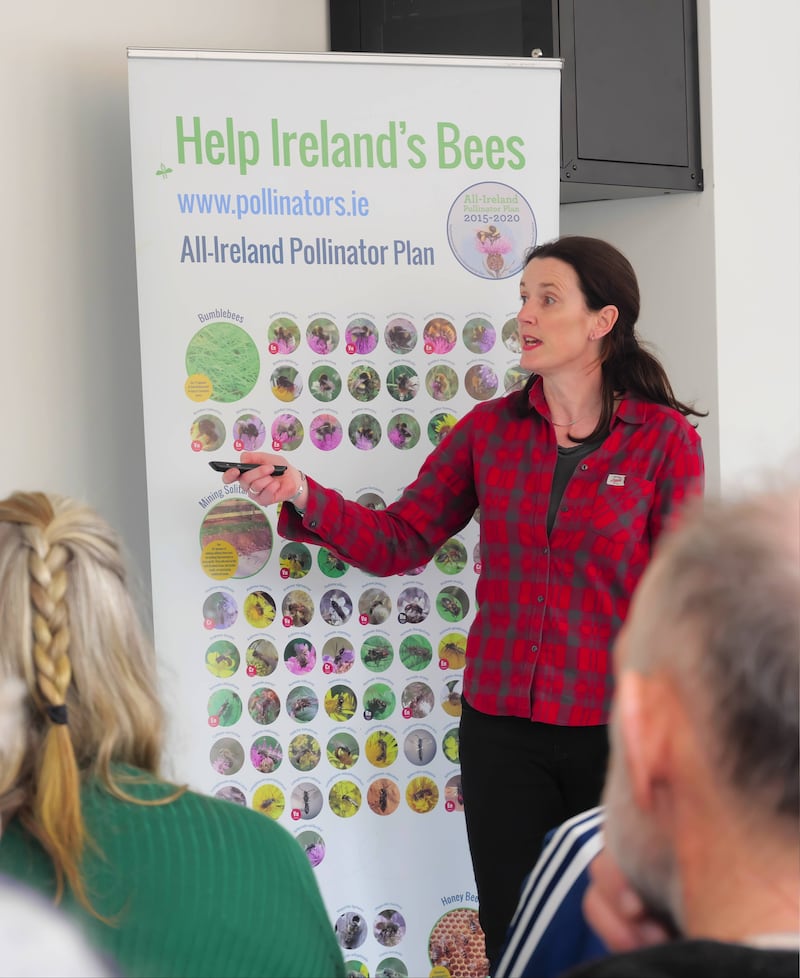
“The ethos of the All-Ireland Pollinator Plan is simple. It’s that small actions taken together can create real change,” explains Fitzpatrick. More than 5,000 locations registered as pollinator-friendly sites, and all local authorities (North and South) signed up as partners to the plan over the last 10 years.
Completed actions over the last 10 years included reduced mowing (the No Mow May campaign) so that dandelions and clover can provide food for insects, more native trees were planted, pesticide use was reduced, hedgerows were left to bloom, and ornamental plants rich in pollen and nectar were grown in parks and gardens.
In July, Fitzpatrick joined Minister for Nature, Heritage and Biodiveristy Christopher O’Sullivan and the North’s Minister for Agriculture, Environment and Rural Affairs Andrew Muir to launch the new All-Ireland Pollinator Plan for 2026-2030 at the National Botanic Gardens in Dublin.
With more funding and an enlarged staff at the NBDC to support it, it is hoped this third iteration of the All-Ireland Pollinator Plan will have a bigger impact than ever.
‘We can see from the All-Ireland bumble bee monitoring scheme which started in 2012 that the decline in bumble bees has stopped – but now we need to see an increase in bumble bees’
— Dr Úna Fitzpatrick, National Biodiversity Data Centre
“We aim to create pockets of nature every 200 metres through 10 work packages covering key sectors to drive landscape-scale change,” says Fitzpatrick.
The specific guidance offered to different groups, from farmers to businesses to community-based committees, has been cited as one of the reasons for the success of the plans to date. The social connections fostered while creating habitats for these wild insects has also offered hope and inspiration to many people.
Now in its next phase, getting more farmers, businesses, transport authorities, public bodies and utility services to open up nature corridors will be key to expanding the amount of landscape available for wild insects to thrive in.
The new pollinator plan is also Ireland’s direct response to Article 10 in the EU Nature Restoration Law, which requires all member states to reverse the decline in pollinators by 2030.
[ Bees in big trouble as the lie of the land worsensOpens in new window ]
The team at the NBDC also want to continue to communicate more with all those making efforts to leave space for nature through the pollinators.ie website.
The involvement of volunteer citizen scientists who count bumble bees, solitary bees, hoverflies and moths on designated sites as part of monitoring schemes run by the NBDC will also be crucial.
The work of researchers in the Irish Pollinator Research Network created by Stout at the start of the first All-Ireland Pollinator Plan in 2015 will also be essential. Scientific evidence this network of scientists provides will remain important to backing up the advice given to individuals and groups.
Although proud of the success of the initiative and thrilled with the increased funding from the Government’s Shared Island initiative, the National Parks and Wildlife Service and others, Fitzpatrick is keen to point out that although pollinators are now in a much better position, they still face major challenges.
“We have made progress, but we need to do a lot more. We can see from the All-Ireland bumble bee monitoring scheme which started in 2012 that the decline in bumble bees has stopped – but now we need to see an increase in bumble bees,” says Fitzpatrick.
One of the unforeseen consequences of climate change is that some new pollinators such as the tree bumble bee and the hairy footed flower bee are arriving in Ireland from Britain and mainland Europe.
Anyone keen to learn more about the new All-Ireland Pollinator Plan can join a free lunchtime webinar run by the NBDC on August 19th from noon to 1pm. See pollinators.ie
Also, during the Irish presidency of the Council of the European Union, the NBDC will host a workshop in Ireland for member states keen to use the Irish pollinator plan as a model for action plans to reverse the decline of pollinators in their countries.


