
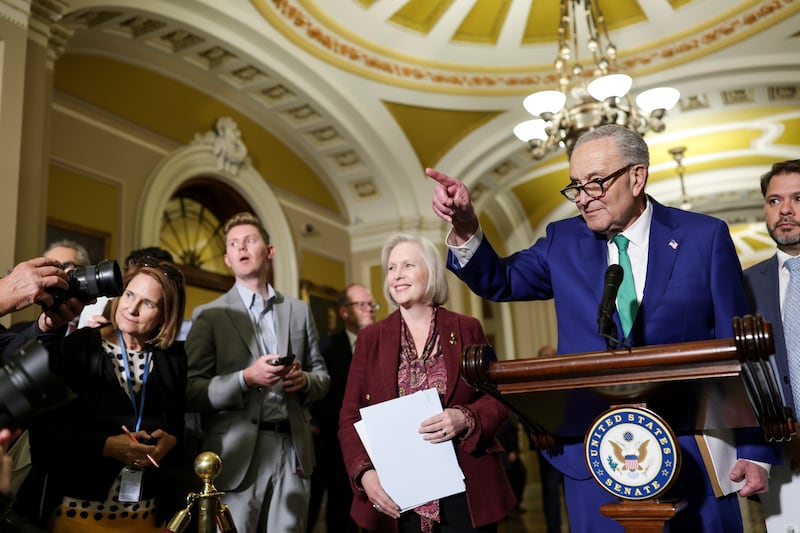
The Tuesday US Senate lunch is a tradition dating back to the more sedate business hours of the 1950s. As Chuck Schumer, the Democrats’ Senate leader, stood across from the ornamental Ohio clock, perched outside the Senate chamber since 1859, his message was nominally one of welcome to the seven senators-elect who had joined the caucus for the weekly gathering. But the press conference was more immediately engaged with quelling internal dissent to his bid to become the next Senate majority leader.
While Schumer (75) was praising the youthfulness and vitality of the now-famous names who flipped Republican safe seats across the country, Bernie Sanders (85) had just concluded a press conference of his own elsewhere in the Capitol, where he explicitly stated he would not be supporting Schumer’s bid to return for his second stint as Senate leader. “In my view, there is a need for the Democratic Party to move in a new and bold direction.”
Sanders said he had known and worked with Schumer for 30 years and personally liked him.
“But I will not be supporting him,” he said with his customary bluntness.
READ MORE


“This was an election, in my view, about change. It was an election in which the American people said loudly and clearly that they are tired of a president who lies all the time, who undermines our constitution and our rule of law, who is a narcissist and who thinks he can do anything he wants.”
Sanders’s stance was not unexpected, but it must have carried a keen sting for Schumer. Of the two Senate veterans, Sanders has managed, in the decade since his hope-fuelled but ultimately failed presidential primary bid against Hillary Clinton, to remain the vital and popular trailblazer of the democratic socialist movement.
He was a prominent booster at the rallies of Troy Jackon in Maine and Abdul El-Sayed in Michigan and retains a broad cross-generational appeal – his appearance, along with Alexandria Ocasio-Cortez, at an October live gig by The Strokes was greeted by fans as a communing of New York political-pop cultural deities.
Schumer, even as the Democrats still bask in their stunning midterm election sweep across the US House and Senate, is fighting against the loudening perception that he is emblematic of a Democratic Party that effectively became extinct in the aftermath of the last presidential election.
Several prominent Democrats have already voiced their reservations, among them Elisa Slotkin, the Michigan senior senator who spoke alongside Sanders and said the party leadership “need a new generation”.
The International Association of Machinists and Aerospace Workers, which has a membership of 600,000, this week released a statement asking Schumer not to seek another term as leader. The anti-Schumer/Hakeem Jeffries argument is predicated on the belief that the midterm blue revolution was down to grassroots activism, volunteerism and exceptional candidates rather than any leadership strategy.
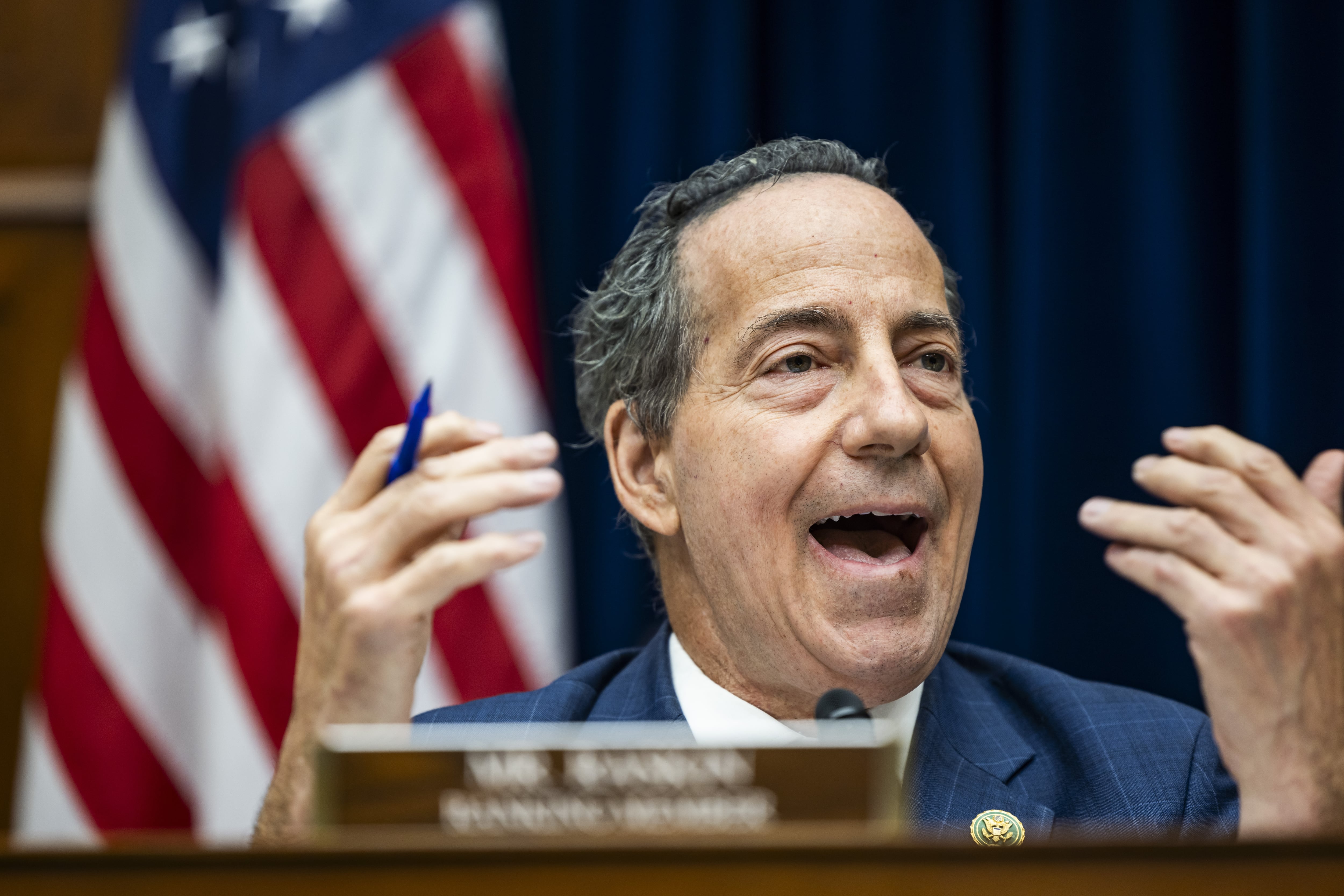
El-Sayed, although respectful of Schumer’s tenure, has been outspoken in his wish to see Maryland senator Chris van Hollen become leader in January, labelling him a “legislators’ legislator” capable of drafting bite-sized Bills to address the socioeconomic and healthcare crises that Democratic politicians can use to hold the government’s feet to the fire.
“Rather than the kind of omnibus Bill packages, we need quick hits that really go out and talk about what we are going to deliver and then force the president to decide if he is going to veto legislation that is broadly popular or work with us to address the problems people are facing.”
Against that, Schumer allies like Ruben Gallego (Arizona) and Kirsten Gillibrand (New York) offered staunch defences of the Schumer record and laid the credit for the midterm results at his door. Schumer, they pointed out, had recruited Roy Cooper, the former North Carolina governor who easily flipped that Senate seat, as well as Ohio’s Sherrod Brown and Josh Turek, the newly elected Iowa senator.
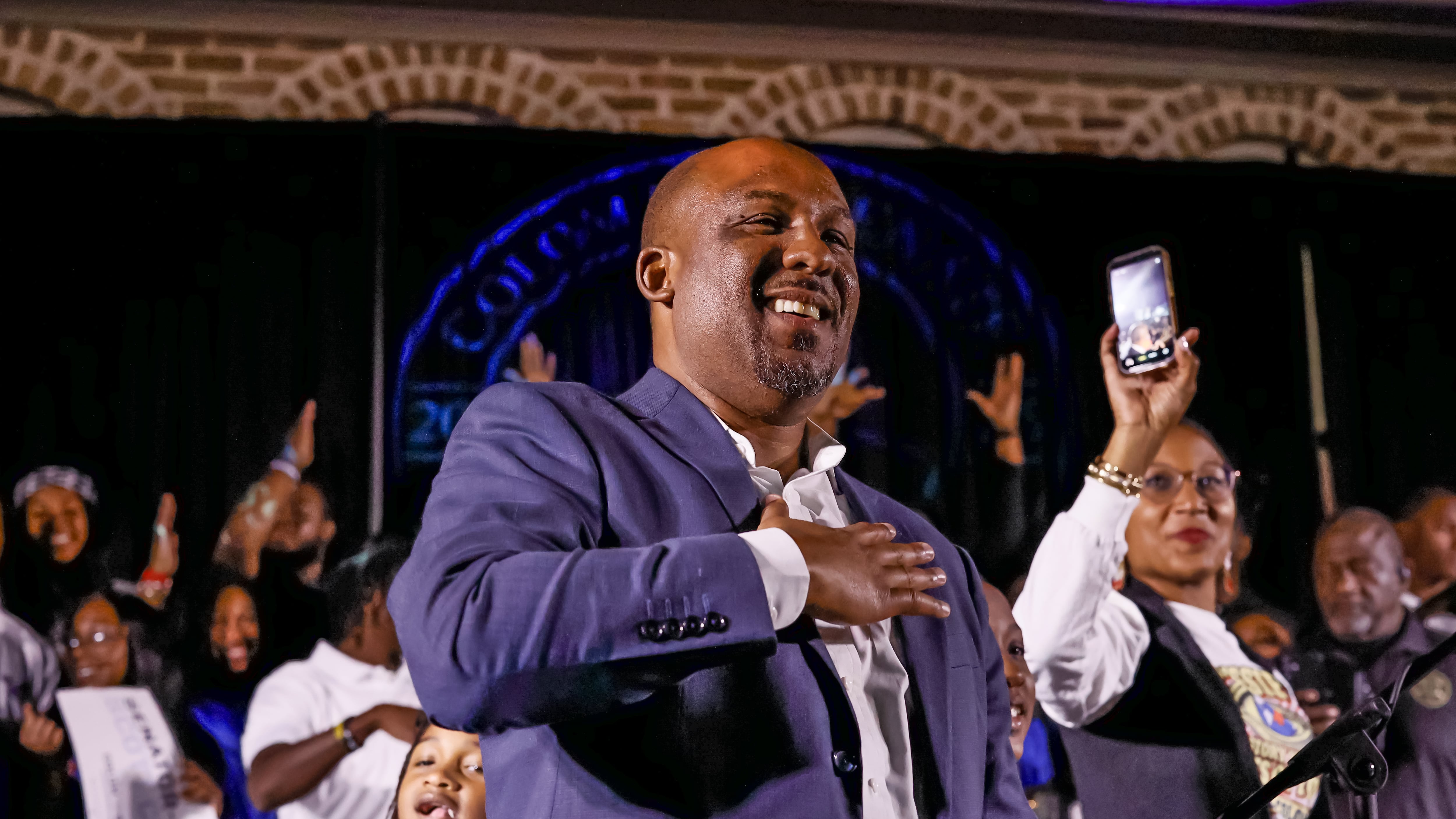
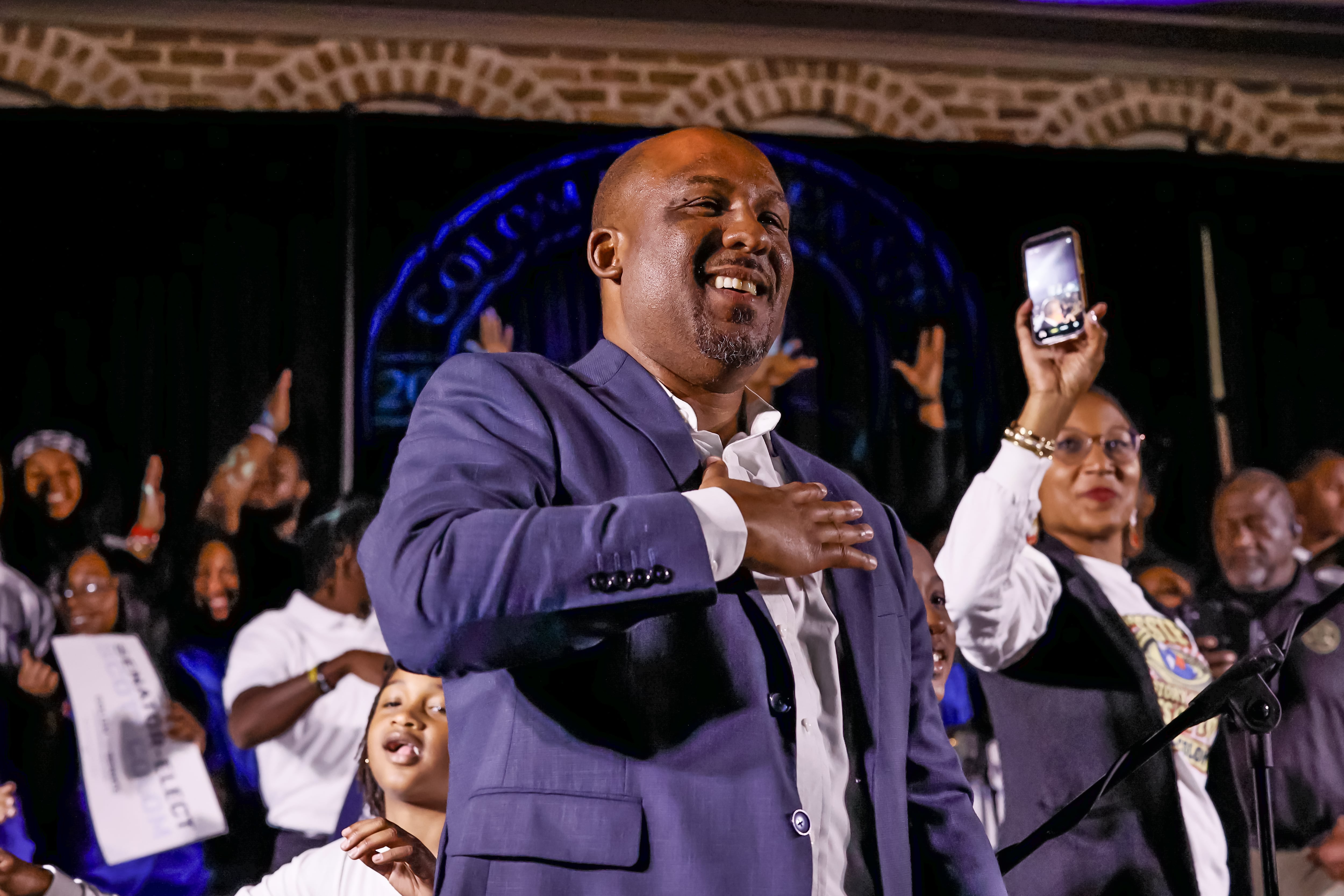
Moreover, he had devised the strategic talking points on “cost, corruption and chaos” and had been at the forefront of amassing the $600 million war chest used in the campaigns. Schumer, Gillibrand pointed out, had over a year ago held a fundraising event for Scott Colom, who sealed his bid for a historic Mississippi Senate seat on Wednesday evening, over a year ago, and made $2 million available as he sought to flip the seat held by Cindi Hyde-Smith in Mississippi.
Even so, Colom himself has been circumspect when asked who he would vote for in the Senate leadership race, nimbly pointing to the need for a geographical spread among the party’s leadership. “It’s not a good thing that both leader Schumer and leader Jeffries both live in the same borough,” he said.
Hakeem Jeffries (56) looks set to become the first black house speaker without internal opposition, even though his minority leadership of that chamber has been criticised in tandem with Schumer’s over the past two years. Neither man is a particularly magnetic speaker.
And as Democratic voters recoiled against the new dispensation of Trump’s second term – the Elon Musk-led Doge destructiveness, the brutality of the Ice operations, the purges against US universities, the tax cuts and attendant healthcare hikes within the One Big Beautiful Bill – they were aghast as the pair seemed to offer only insipid congressional resistance. The party ultimately caved when it came to ending the 2025 government shutdown.
As public outcry towards Israel’s destruction of Gaza deepened, both Democratic leaders were and are regarded as broadly sympathetic to Binyamin Netanyahu’s government – and both have been recipients of American Israel Public Affairs Committee funding.

Within hours of the startling reversal of congressional power last week came various interpretations of what American voters now want from the Democratic Party. The newest representatives and senators have repeatedly stressed their interest in addressing the public issues rather than engaging in politically charged but ultimately futile congressional investigations and impeachment votes.
There is, Sanders argued on Tuesday, “more income wealth inequality now than at any time in the history of this country”, calling for an urgent reshaping of an “economy that works for all”.
“And do I think Chuck has been leading in that direction? No, I don’t.”
Jeffries and Schumer have led countless chamber speeches about the corruption of the Trump administration and are bound to lead efforts to call key officials to account when the Democrats assume the majority in January. In his address on Tuesday, Schumer reserved criticism for war secretary Pete Hegseth, whom, he said, is responsible for “one of the greatest foreign policy fiascos in American history”.
“America needs a serious secretary of defence and not a wannabe warlord.”
Just two hours after Schumer spoke, the house held a procedural vote on whether to advance the articles of impeachment tabled by Thomas Massie, the renegade Republican representative. It fell short by 211 to 204. Massie was the lone Republican to vote against his party’s motion to refer the articles to committee – effectively killing it. The solidarity was a vivid snapshot of president Trump’s enduring command over Republicans in congress.
But 11 Democratic House representatives were, for various reasons, not in attendance. Their votes might have been enough to force the impeachment articles to a floor vote – although the Republicans also had absentees.
Still, it was not a good harbinger as Schumer and Jeffries, the establishment faces of the Democratic Party, insist to colleagues and public alike that they can front its dynamic congressional future rather than its ineffectual past.