More than 400,000 staff across the public service would receive pay increases of 10.75 per cent over two years and nine months under new proposals being considered by trade unions.
Talks on a new public service pay deal to avoid a planned strike later this week were continuing on Tuesday, as Government and union officials sought to put in place the final pieces of a new agreement.
The Irish Times understands the new proposals, put forward with the assistance of the independent group headed by former chairman of the Labour Court Kevin Foley, would see public service personnel receive a 2 per cent rise this year backdated to September.
There would also be a one per cent local bargaining payment which would be linked to ongoing change, a number of sources familiar with the discussions said on Tuesday.
READ MORE


The remaining 7.75 per cent would be paid in stages over a further period of two years and three months.
The overall pay deal would run until March 2029.
The unions earlier rejected an offer of 7.75 per cent to be paid in instalments over the course of what was intended to be a 2½-year term.
The Government side subsequently tabled a revised offer of 10.5 per cent over 30 months and after further input from unions this is understood to have been amended to 10.75 per cent over 33 months with an initial 2 per cent increase paid when the agreement is concluded and backdated to the start of September.

The proposals also provide for minimum increases for lower-paid staff that would boost their pay by more than the deal’s headline figures. The absence of such measures on low pay from the original offer had been severely criticised by union leaders.
The Government side has indicated such a deal would cost €5 billion to implement.
While some outstanding matters remain between the two sides, including on non-pay issues, it is still expected that the talks could conclude with an agreement later on Tuesday.
“We’re committed to trying to close out a deal today, but really, that’s going to depend on how the talks go,” said the unions’ lead negotiator, Kevin Callinan of Fórsa, on the way into the Workplace Relations Commission (WRC) on Tuesday morning.
“There are a number of matters outstanding. I think we’ll see how the day goes. We’re not optimistic, we’re not pessimistic. We’re seriously going to try and negotiate a public service deal.”
Asked if Thursday’s strike by public sector workers would go ahead, he said: “It’s impossible to say. It all depends on how the day goes and how quickly we can manage to reach agreement on the outstanding matters.”
His comments came after the two sides had spent a lengthy session on Monday into early Tuesday morning engaging with the Government-appointed steering group led by Foley.
Minister for Public Expenditure Jack Chambers told the Dáil negotiations were confidential but “it was positive to see a conclusion and a resolution at the independent group chaired by Kevin Foley”.
Preparations by the various public sector unions, including the two largest participants, Fórsa and Siptu, for Thursday’s stoppages have continued and the associated demonstrations planned for eight cities and towns around the country.
“Until we hear back from the negotiators on whether an agreement has been established, plans for the strike and rallies on Thursday must continue,” Fórsa deputy general secretary Katie Morgan told members in a communication.
The union said about 50,000 of its members had registered to participate in the marches, with 20,000 signed up to the one in Dublin.
Siptu told its members it was proceeding on the basis the strike would happen unless a deal was finally agreed and said work was continuing on confirming derogations for staff maintaining essential services, especially in the health sector.
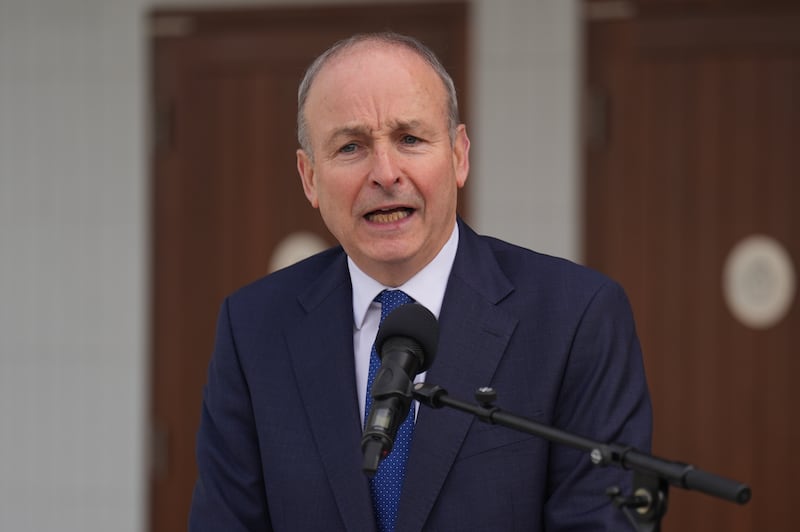
On his way into Tuesday morning’s Cabinet meeting, Taoiseach Micheál Martin declined to be drawn on the possibility of a pay deal and a cancellation of the planned strike.
“I don’t believe there is a basis for strike action but all sides are sworn to confidentiality ... so we’ll let those talks continue today,” he said.
Green Party leader Roderic O’Gorman welcomed the fact the Government “has finally made a credible pay offer to the public service unions, though it is coming very late in the day”.
He accused Chambers of “lowballing the public sector unions in terms of the initial pay offer” and argued that the “whole mess” could have been avoided if the Government had “engaged in good faith” with the trade unions.
Social Democrats TD Aidan Farrelly accused Chambers of “inertia and inaction over the summer” when it came to the public pay issue. He welcomed the talks and said his party wants to see them continuing with “real energy” but did not want to “say anything that would try and impact those talks”.
Labour Party TD Ged Nash was also cautious in his remarks about the talks, saying “it would be unwise of me to make any comments at this point in time as to where I think this might land”.
He added: “This is a quickly moving situation, but as things stand at the moment, and I think this is the clear message, people are mobilised.”
Nash said that there is a national day of strikes planned for Thursday. “We’re still working on that basis, and we continue to work on that basis until we know otherwise.”
Solidarity TD Ruth Coppinger said that the unions must secure pay increases above inflation saying it would be an “absolute insult” to workers otherwise.
Aontú leader Peadar Tóibín urged the Government and unions to come to a deal and said his party thinks it is “important that the Government starts to focus on the productivity elements.”
Meanwhile, a work-to-rule planned by members of the Garda Representative Association for this week has been stood down after the organisation said it had made “significant progress with the Garda Commissioner”.
The industrial action was set to coincide, over the coming days, with some of the highest-profile events of Ireland’s presidency of the Council of the EU. They include the visit to Dublin on Thursday of about 50 government leaders and heads of state, including Ukrainian president Volodymyr Zelenskiy.