Donald Trump warns US will ‘obliterate’ Iranian power plants if it fails to open Strait of Hormuz
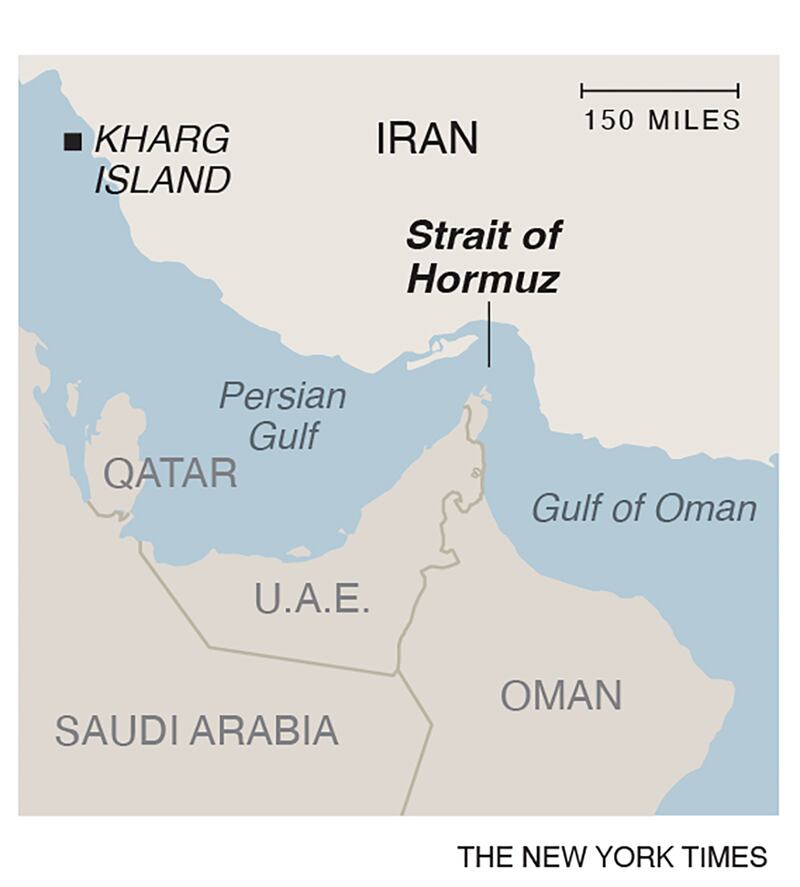
President Donald Trump warned the US will “obliterate” Iranian power plants if it does not fully open the Strait of Hormuz within 48 hours.
His statement came hours after Iranian missiles struck two communities in southern Israel late on Saturday, leaving buildings shattered and dozens injured in dual attacks not far from Israel’s main nuclear research centre.
The developments signalled the war was moving in a dangerous new direction at the start of its fourth week.
Trump — who is facing increasing pressure at home to secure the Strait as oil prices soar — issued the ultimatum in a social media post while he spent the weekend at his Florida home.
Trump said he is giving Iran 48 hours to open the vital waterway or face a new round of attacks. He said the US would destroy “various POWER PLANTS, STARTING WITH THE BIGGEST ONE FIRST!”
Iran warned early on Sunday that any strike on its energy facilities would prompt attacks on US and Israeli energy and infrastructure assets in the region, according to a statement citing an Iranian military spokesperson carried by state media and semi-official outlets. - Associated Press
More than 100 people were wounded in Iranian missile strikes on two southern Israeli towns
More than 100 people were wounded in Iranian missile strikes on two southern Israeli towns on Saturday, after Israeli air defence systems failed to intercept the projectiles.
Images from the scene showed first responders searching the wreckage, including damaged residential buildings.
Tehran’s main nuclear enrichment site at Natanz was hit earlier in the day and it responded with missiles that hit the southern cities of Dimona and Arad, the largest near the centre in Israel’s sparsely populated Negev desert. It was the first time Iranian missiles penetrated Israel’s air defence systems in the area around the nuclear site.
“If the Israeli regime is unable to intercept missiles in the heavily protected Dimona area, it is, operationally, a sign of entering a new phase of the battle,” Iran’s parliament speaker Mohammad Bagher Ghalibaf said on X before word of the Arad strike spread.

Israeli prime minister Binyamin Netanyahu said more emergency crews were being sent to the scene.
“This is a very difficult evening,” he said.
Rescue workers said the direct hit in Arad caused widespread damage across at least 10 apartment buildings, three of them badly damaged and in danger of collapsing. At least 64 people were taken to hospitals.
Dimona is about 12 miles west of the nuclear research centre and Arad is around 22 miles north. - Associated Press

Strait of Hormuz remains open to all except ‘enemies’, Iran tells UN maritime agency
The Strait of Hormuz remains open to all shipping except vessels linked to “Iran’s enemies”, Iran’s representative to the UN maritime agency said on Sunday.
The threat of Iranian attacks during the US-Israeli war on Iran has kept most ships from getting through the narrow strait, the conduit for around a fifth of global oil and liquefied natural gas supplies, threatening a global energy shock.
Ali Mousavi said Tehran was ready to cooperate with the International Maritime Organisation to improve maritime safety and protect seafarers in the Gulf, adding that ships not linked to “Iran’s enemies” could pass the strait by coordinating security and safety arrangements with Tehran.
“Diplomacy remains Iran’s priority. However, a complete cessation of aggression as well as mutual trust and confidence are more important,” Mousavi said, adding that Israeli and US attacks against Iran were at the “root of the current situation in the Strait of Hormuz”. - Reuters
Asia’s oil-importing nations seek alternatives to overcome Strait of Hormuz blockage
The effective closure of the Strait of Hormuzis piling pressure on major importers of oil, gas and fuels from the Persian Gulf, prompting them to scramble for solutions.
For Asia’s oil-importing nations caught in the crossfire, the closure is limiting supplies of oil, gas and fuels and pushing up prices — forcing them to consider alternatives, in some cases by finding other suppliers or by attempting negotiations with Tehran.
India, in the grip of an acute liquefied petroleum gas shortage, has secured at least two cargoes of the cooking fuel and is negotiating transit for more.
In a weekend call with Iran’s president Ahmad Masoud Pezeshkian, Indian prime minister Narendra Modi stressed the importance of keeping shipping lanes “open and secure,” according to a post on X.
[ US touts progress in Iran as Trump floats ‘winding down’ warOpens in new window ]
A Pakistan-bound crude tanker made its way through the corridor a week ago, while Turkey was also given the green light, according to a state-owned news outlet.
Other Asian buyers with close ties to the US are attempting to navigate the delicate balance between the urgent need for oil and lower prices — and the need to avoid antagonising a volatile Trump administration, especially when most have resisted calls from Washington for warships to help secure the strait.
Iran’s foreign minister Abbas Araghchi indicated in an interview on Friday that the country was ready to allow Japan-related ships to transit the waterway. His counterpart in Japan quickly clarified that the country was not considering unilateral negotiations.
Instead, Japan would focus on ensuring “conditions where everyone can pass,” foreign minister Toshimitsu Motegi said, stressing the importance of maintaining broad freedom of navigation. About 45 Japan-linked vessels remain affected in the strait, he said on Sunday.
South Korea, another major importer of crude and exporter of fuels into Asia and beyond, has been similarly circumspect, saying it is closely monitoring developments and communicates with relevant countries, including Iran. - Bloomberg
Six dead after helicopter crash in Qatar territorial waters
Six people were killed in a helicopter crash in Qatar’s territorial waters while operations continue to find the last missing person, the interior ministry said on Sunday.
The defence ministry earlier said the helicopter had crashed after suffering a technical malfunction during “routine duty”.
Search operations are underway for crew members and passengers.
[ Israel’s strategic aims, rather than America’s, are shaping the war with IranOpens in new window ]
Overnight attacks target US diplomatic and logistics centre at airport in Baghdad

Earlier, it was reported that a drone attack targeted a military base near Baghdad International Airport on Sunday.
The AFP news agency is now reporting that at least six overnight attacks targeted a US diplomatic and logistics centre at the airport.
“Eight separate attacks, carried out until dawn with rockets and drones targeted the US centre,” a senior security official told AFP, while a second official said there had been six strikes, not saying who was behind them. - Guardian
Bahrain’s defence force says in an update on social media that it has intercepted and destroyed 246 drones and 145 missiles from Iran since the war started. - Guardian
Zelenskiy has a ‘very bad feeling’ about impact of Iran war on Ukraine’s fight against Russia

In an interview during a visit to London in the week, the Ukrainian president Volodymyr Zelenskiy talked about the impact of Donald Trump’s attention being diverted from Russia’s war on Ukraine to the US-Israeli war with Iran.
He said: “I have a very bad feeling about the impact of this war on the situation in Ukraine and the focus of America is more on the Middle East than on Ukraine unfortunately.
“Therefore, you see that our diplomatic meetings, trilateral meetings are constantly postponed.
“There is one reason: war in Iran.”
Zelenskiy said although trilateral meetings have been postponed Kyiv and Washington officials are still talking daily and that Washington and Moscow are speaking daily. - Guardian
Seven people killed in a helicopter crash in Qatar’s territorial waters, Qatar and Turkey said on Sunday.
One Turkish soldier and two personnel from Turkish defence firm Aselsan were killed in a helicopter crash in Qatar on Saturday, the Turkish defence ministry said on Sunday, adding the aircraft had crashed due to a technical issue during a training flight.
In a statement, the ministry said four Qatari troops were also killed in the accident. It added Qatari authorities would carry out inspections to determine the exact cause of the crash. - Reuters
Israeli military instructed to accelerate the demolition of Lebanese homes in ‘frontline villages’, minister says

Israel’s defence minister Israel Katz said on Sunday that he and prime minister Binyamin Netanyahu had instructed the military to accelerate the demolition of Lebanese homes in “frontline villages” to end threats to Israeli communities.
The military was instructed to immediately destroy all bridges over Lebanon’s Litani river which he said were used for “terrorist activity”, Katz said in a statement released by his office.
Projectile hits vessel off UAE’s Sharjah, UKMTO says
An unknown projectile struck a vessel 15 nautical miles north of the United Arab Emirates’ Sharjah, the United Kingdom Maritime Trade Operations (UKMTO) said early on Sunday.
It said all crew were reported safe.
The UKMTO said in a later statement that the target of the incident could not be conclusively identified and authorities were investigating.
Internet blackout in Iran enters its 23rd day, according to internet monitoring group NetBlocks.

It said, Iran is entering a 23rd day isolated from the world as the regime-imposed internet blackout continues in its fourth week.
“The measure adds to the wartime distress of millions of civilians who lack independent sources of information and alerts. Those without access to Starlink or alternative ways to communicate – which are often expensive – are cut off, not only from the outside world but the blackout also severely curtails Iranians’ ability to communicate with each other, making mobilisation, for example, much more difficult."
Iran warns of ‘irreversible damage’ to regional infrastructure if power plants attacked
Critical infrastructure and energy facilities in the Middle East could be “irreversibly destroyed” should Iranian power plants be targeted, Iran’s parliament speaker Mohammad Baqer Qalibaf said in comments posted on X on Sunday.
His comments come after US president Donald Trump warned that Iranian power plants would be targeted if the Strait of Hormuz is not “fully open” within 48 hours.
Qalibaf said regional infrastructure would become “legitimate targets” should Iran’s facilities be hit, and that its retaliation would increase the price of oil for a while.
[ Kneecap arrive in Cuba to ‘shine a light’ on ‘collective punishment’ by USOpens in new window ]
One person was killed after a fire broke out in two vehicles near Israel’s northern Galilee, the Israeli emergency service said on Sunday, after the Israeli military reported strikes from Lebanon toward a community along the north border.
Tánaiste says the Government will ‘take measures’ on Tuesday to ‘reduce prices’ at the pumps.
“I am very conscious of the fact that people are really feeling financial pressure, and indeed financial anxiety, as a result of the ongoing conflict in the Gulf and wider Middle East region,” said Tánaiste and Minister for Finance Simon Harris in a statement.
“The Government will take measures on Tuesday to reduce prices at the petrol pump, to support those most at risk of fuel poverty and to help key sectors of the Irish economy that we depend on for our supply chains, including the haulage sector.
He said the hit to oil supplies is the largest ever shock to the global oil market.
“At this point, there is no clarity regarding the depth and duration of the conflict - this means there is considerable uncertainty regarding the economic fallout from the shock to oil supplies.
He said the “interventions” announced on Tuesday will “strike an appropriate balance between providing help now and keeping some of our powder dry.”
He believes any measures introduced initially should be for a “short, defined period, with the option to renew, revise or adjust them as circumstances evolve.”
“As of now, I expect the Irish economy to continue to grow this year, albeit at a slower pace than previously envisaged.
Later this week, Harris will attend a meeting of the Eurogroup.
He has “no doubt” that Ireland and the Irish economy will get through this.
“That said, the sooner we see a de-escalation of the conflict the better for both humanity and for the living standards of everyone,” he added.
115 people injured when two ballistic missiles hit Israel
Iran’s strikes on Israel appear to be intensifying as the conflict in the Middle East enters its fourth week, leaving dozens of people injured and causing damage and disruption across the country.
Two ballistic missiles evaded Israeli air defences late Saturday and hit the southern cities of Arad and Dimona. About 115 people were hurt, 11 of them seriously, according to authorities.
Israel’s military said it’s investigating the failure to intercept the attacks, while rescue crews continue to search for those trapped inside buildings.
Prime minister Binyamin Netanyahu described the events as a “very difficult evening in the fight for our future.”
Sixteen people, all civilians, have been killed in the country by Iranian missiles since the US and Israel launched the war on February 28th, according to authorities.
More than 4,000 people have been killed across the wider Middle East, according to governments and non-government agencies, with more than three quarters of the fatalities in Iran.
In Lebanon, where Israel has ramped up an offensive against Tehran-backed Hizbullah militants, the toll is over 1,000. - Bloomberg
Pope Leo calls war in Middle East a ‘scandal’ to humanity

Pope Leo on Sunday said death and suffering caused by the war in the Middle East are a “scandal to the whole human family”, renewing his plea for an immediate ceasefire.
As the US-Israeli war on Iran enters its fourth week, the first US pope said he continues to follow with “dismay” the situation in the Middle East and in other regions torn apart by war and violence.
“We cannot remain silent in the face of the suffering of so many people, the defenceless victims of these conflicts. What hurts them hurts the whole of humanity,” he said at his weekly Angelus prayer in St. Peter’s Square.
“I strongly renew my appeal for us to persevere in prayer, so that hostilities may cease and the way may finally be paved for peace,” he added.
Slovenia temporarily limits fuel purchases
Slovenia on Sunday temporarily limited fuel purchases to tackle shortages at the pump caused in part by cross-border fuelling and stockpiling due to the Iran war, raising concerns about security of supplies as the country goes to the polls.
Fuelling at individual service stations is limited to 50 litres per day for private vehicles and 200 litres for legal entities and private businessmen, such as farmers. The restrictions will stay in force until further notice, prime minister Robert Golob announced on Saturday evening.
“Let me reassure you that there is enough fuel in Slovenia, the warehouses are full and there will be no fuel shortages,” he said.
Golob said the problem lay in the transportation of fuel to gas stations, and that the army would use tankers to help retailers move supplies. - Reuters
Middle East war has reached ‘perilous stage’ after attacks on nuclear facilities, WHO warns
The head of the World Health Organisation, Tedros Adhanom Ghebreyesus said, “the war in the Middle East has reached a perilous stage with strikes reportedly hitting the Natanz Enrichment Complex in Iran, and the Israeli city of Dimona, where a nuclear facility is located,” in a post on X.
“Attacks targeting nuclear sites create an escalating threat to public health and environmental safety.”
“I urgently call on all parties to exercise maximum military restraint and avoid any actions that could trigger nuclear incidents.”
His comments come after an Iranian missile hit the Israeli town of Dimona, near the site of a nuclear facility, in what Iran said was retaliation for strikes on its own nuclear site at Natanz.
In a later post he wrote, “War doesn’t bring peace. It just teaches the next generation new reasons to hate. #ChoosePeace.” - Guardian
About 200 people injured in Iranian missile strikes near nuclear facility in Israel

Iranian missile strikes have wounded about 200 people in southern Israel, after air defence systems failed to intercept projectiles that hit two cities close to a nuclear facility.
Among the injured in the attacks on Arad and Dimona were a 12-year-old boy and a five-year-old girl, both reported to be in serious condition.
The Israeli broadcaster Channel 13 reported early indications of possible deaths, though there was no official confirmation.
In Tel Aviv, 15 more people were injured on Sunday in a separate attack involving a cluster bomb.
The attacks are adding to mounting pressure on Israel’s air defence systems, with Iranian strikes increasingly testing their limits. - Guardian
‘Do not be complacent,’ says Israeli prime minister

In a visit to Arad in southern Israel, where more than 80 people were injured by Iranian missile strikes on Saturday, prime minister Benjamin Netanyahu said it was a “miracle” no one was killed.
Speaking on Sunday, he urged the Israeli public not to be “complacent”, saying they need to go into shelters during missile alerts.
He said: “There was a full ten minutes from the alert until the missile fell. The missile fell here, between the buildings. And if everyone had gone during those minutes into the protected spaces, into the shelters beneath every building here, no one would have been harmed. Do not be complacent, do not be indifferent. When you hear the first alert, go immediately to the protected space.”
Fresh strikes launched by Israel on southern Lebanon
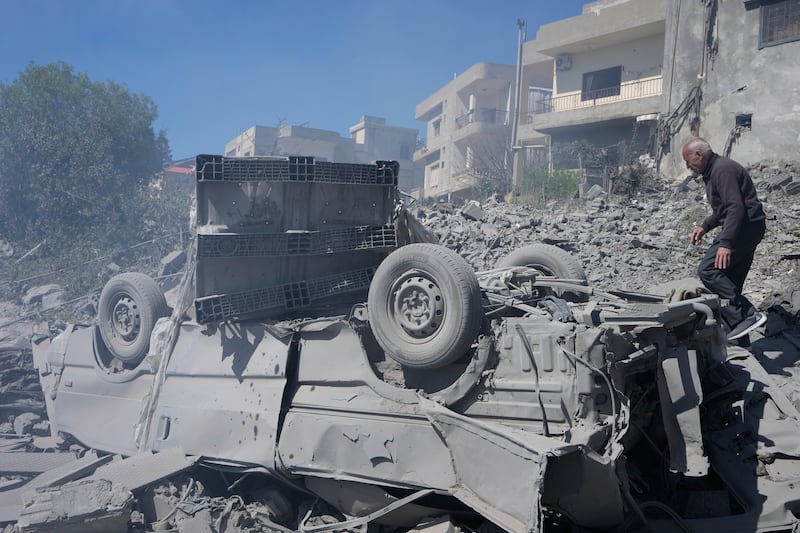
The Israel Defense Forces says it has launched fresh strikes on southern Lebanon targeting Hizbullah.
In a statement shared on Telegram, it said ground and air forces were involved in the operation.
In a separate update earlier on Sunday, the IDF said it had killed nine members of the Iran-backed group on Saturday evening.
Lebanon was drawn into the US-Israel war against Iran when Iran-backed Hizbullah fired missiles into Israel.
Israel responded with air strikes and later sent ground troops into the south of the country.
Meanwhile, Israeli defence minister Israel Katz has told forces to destroy bridges over the Litani River – which is used by Hizbullah - saying he wants troops to escalate the destruction of homes in targeted villages.
Air strikes destroyed two bridges over the river linking southern Lebanon with the rest of the country earlier this week, the IDF said.
AFP has reported that Israeli military have struck a bridge in south Lebanon after a warning.
Al Jazeera Arabic reported that there has been Israeli artillery shelling and air strikes in several towns in southern Lebanon.
Shelling was reported in Arnoun, Zawtar al-Sharqiyah and Yahmar al-Shaqif.
An air strike was also reported on the outskirts of Yahmar al-Shaqif. There were no immediate reports of casualties. - Guardian
Extensive damage to critical infrastructure in Iran, officials say
Iran’s critical water and energy infrastructure have suffered extensive damage due to US and Israeli strikes on tens of thousands of civilian sites, officials said on Sunday.
ISNA news agency reported that energy minister Abbas Aliabadi said, “the country’s vital water and electricity infrastructure has suffered heavy damage following terrorist and cyber attacks by the United States and the Zionist regime.”
Iran’s Red Crescent chief Pirhossein Kolivand said the total number of damaged civilian sites “has reached 81,365 based on the latest field assessments”. He said the figure includes residential and commercial units, schools, medical centres and vehicles. - Guardian
Kuwait has filed a complaint before the International Civil Aviation Organisation regarding dangerous airspace disruptions caused by Iranian attacks, the country’s Civil Aviation says.
It said, “Iran’s attacks are a blatant violation of international conventions, as they exposed passenger safety to serious risks.”
Hizbullah reported missile attacks on Israeli positions near border
In separate statements, the group said it targeted gatherings of Israeli troops at the Marj site opposite the town of Markaba, as well as in Jal al-Hammar, south of Odaisseh.
It also said it carried out a third missile barrage targeting Israeli soldiers in the Taybeh project area. - Guardian
Iran says it will ‘irreversibly destroy’ Middle East infrastructure if US attacks energy sites

Iran has said it will “irreversibly destroy” essential infrastructure across the Middle East if the US attacks its energy sites, hours after Donald Trump threatened to “obliterate” the country’s power plants if the strait of Hormuz was not opened within two days.
As Iranian missiles struck two southern Israeli cities overnight, injuring dozens and shattering apartment buildings, the developments signalled a dangerous potential escalation of the war in the Middle East, which is now in its fourth week.
Mohammad Bagher Ghalibaf, the speaker of the Iranian parliament, said on Sunday that “vital infrastructure as well as energy and oil infrastructure” across the region would become “legitimate targets” as soon as his country’s own was attacked. - Guardian
Iran will completely close strait of Hormuz if Trump acts on threats to target power plants
In a new statement, Iran’s Islamic Revolutionary Guard Corps (IRGC) said Iran will completely shut the strait if Trump proceeds with his threats to target Iranian energy facilities.
The IRGC were quoted as saying that companies with US shares would be “completely destroyed” if Iranian energy facilities were targeted by Washington and said energy facilities in countries that host American bases would be “lawful” targets.
“We did not start the war and we will not start it now, but if the enemy harms our power plants, we will do everything to defend the country and the interests of our people,” the statement reads. - Guardian
IAEA chief says he hopes to ‘re-establish’ US-Iran nuclear talks
The director general of the International Atomic Energy Agency (IAEA), Rafael Grossi, said he hopes to “re-establish” talks between Iran and the US about Tehran’s nuclear programme despite the escalating nature of the conflict.
“I’ve been having important conversations here at the White House, and also with Iran. There are some contacts, and we hope to be able to reestablish that line,” Grossi told CBS News while cautioning that “nothing can happen while bombs are falling”.
On February 28th, the US and Israel launched their war on Iran – widely seen as illegally – in the midst of negotiations, raising questions about whether Washington was ever serious about striking a deal with Tehran over its nuclear programme. The next round of talks was due to take place in Vienna on 2 March, but never happened. - Guardian
‘Threats and terror’ only strengthen our unity, Iranian president says following Trump threats
Iranian president Masoud Pezeshkian said “threats and terror” are strengthening Iranian unity, after Donald Trump yesterday warned he would “obliterate” Iranian power plants if the strait of Hormuz is not opened within 48 hours.
Pezeshkian said: “The illusion of erasing Iran from the map shows desperation against the will of a history-making nation. Threats and terror only strengthen our unity.
“The Strait of Hormuz is open to all except those who violate our soil. We firmly confront delirious threats on the battlefield.”
Photographs of Israeli strikes on a bridge in Lebanon


‘We are at a dangerous moment,’ says Minister for Foreign Affairs

Targeting of nuclear installations in the current conflict in the Middle East would mark “an extremely dangerous escalation and must be avoided”, the Government has said, reports Martin Wall.
It has also said urgent action was now needed to prevent the crisis from deepening further and described threats by Iran to international shipping the region as “unacceptable”.
The Government has urged de-escalation of the conflict to create a space for dialogue.
In a statement on Sunday afternoon the Minister for Foreign Affairs Helen McEntee said: “We are at a dangerous moment, as a growing cycle of escalation and violence takes hold in the Gulf and across the wider Middle East, with ongoing military action by Israel, the United States and Iran.”
For the full article, read here.