Trump administration officials have learned to choose their words carefully to avoid getting ahead of their mercurial boss. But on one subject they appear ever ready to let rip: Europe.
From the vice-president down, US officials have cast themselves as being on a mission to save western civilisation from the Continent they see as its cradle. Mass migration, curbs on speech and the surrender of national sovereignty, they argue, threaten not only the transatlantic relationship but the very idea of Europe.
“We don’t save the West if Europe doesn’t get its act together,” said Kevin Roberts, president of the Heritage Foundation, the conservative think tank that helped to draw up the agenda for Donald Trump’s second term. “I’ve been worried for a long time, for the better part of two decades, that Europe was committing civilisational suicide.”
“The civilisation that we’re defending is 3,500 years old,” he added, tracing it back through Jerusalem, Athens, Rome, London and Philadelphia.
READ MORE


Arguing that Europe needs saving from itself, the administration has backed like-minded parties and movements across the Atlantic. Vice-president JD Vance went so far as to campaign for Viktor Orbán, Hungary’s former prime minister and a lodestar for the populist-nationalist right, on the eve of what proved to be Orbán’s electoral defeat.

At the state department, officials have earmarked millions of dollars in grants for like-minded groups in Europe seeking to combat “censorship” and develop “civilisational bonds” between the US and the Continent.
Anna Kelly, a White House spokeswoman, said the US president “has rightfully warned other world leaders that western civilisation will continue to erode if they don’t quickly reverse course.”
The focus on Europe has widened the transatlantic rift and prompted officials and commentators on both sides of the Atlantic to ask: why is Maga coming for Europe?
Sarah Rogers, the under-secretary of state for public diplomacy and one of Trump’s most outspoken critics of Europe, denies the administration is simply out to pick a fight.
“Our national security strategy and other statements we’ve made are often framed as critiques of Europe or attacks on Europe, and that’s not the frame that I would use,” she told the Financial Times.
“When we advocate on these themes, it’s not because the American people or we, as their representatives, are interested in conflict with Europe for the sake of it,” she said. “It’s because we identify with the UK and Europe in a lot of ways ... When it comes to certain challenges, we’re all in this together.”
Rogers occupies a role traditionally used to advance US soft power through educational exchanges and cultural programmes. The former litigator is better known, however, for acerbic social media posts about European and UK migration policies and efforts to regulate hate speech.
Earlier this year Rogers said Germany had imported “barbarian rapist hordes”. She later clarified that she was seeking to make a point about a 2018 hate speech investigation into a German far-right lawmaker who had used similar terms.
Her stance on free speech in Europe contrasts with the administration’s relative silence on many authoritarian states. In June, she visited Turkmenistan, one of the world’s most oppressive regimes, making scant reference to freedom of speech.
“Our engagement on these issues depends upon the depth of our entanglement with countries, the nature of our alliance, it depends upon the country’s history and trajectory,” she said.
[ Meet Trump’s Maga disciples tearing up the diplomatic rule book across EuropeOpens in new window ]
Maga’s view of Europe as a civilisation on the brink grew out of the American new right, an intellectual and policy ecosystem that flourished between Trump’s two terms. As Republicans shed the remnants of Reaganite conservatism, a new cohort of Maga-aligned think tanks and intellectuals sought to turn the raw power of Trump’s political machine into an ideological doctrine and policy programme.
The Biden years gave Trump’s allies a “half-time breather” in which to develop what they saw as the intellectual core of Trumpism, said Joshua Trevino, a senior director at the America First Policy Institute.
Explaining why the Trump administration has been so outspoken on freedom of speech, Trevino said American conservatives “actually care what happens in Europe” because they see it as part of themselves – and Britain in particular as an ancestral source.
That sense of kinship meant Europe’s political direction could feel like a “moral injury”. “There’s actually two different standards in the mental framework among conservatives now in relationships with foreign nations,” he said. One is more transactional, the other “civilisational”.
Maga’s stark new theory of the Atlantic alliance was set out by the US vice-president at the Munich Security Conference last year. Vance said the greatest threat to Europe came not from Russia or China but from “within” – its alleged divergence from the US on values such as freedom of speech.
That thinking was later codified in the National Security Strategy, the blueprint for US foreign policy, which called for “cultivating resistance” to Europe’s civilisational decline. The US state department’s own strategy document set a similar goal: to “rebuild the civilisational alliance with European states”.
The ideological scattergram of the American new right encompasses right-wing populists, national conservatives, post-liberal Catholic intellectuals, libertarian tech founders and hard-right activists.
“It’s two trends coming together: the long decline of the American social contract and the complacent assumption in all western democracies that representative democracy is like a perpetual clock that is never in need of repair,” said Constanze Stelzenmuller, director of the centre on the US and Europe at the Brookings Institution and a Financial Times contributing editor.
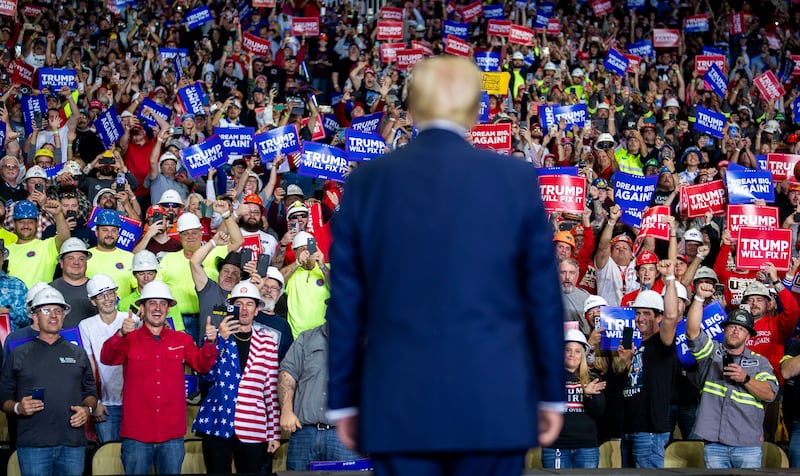
The surge was helped by funding from tech billionaires such as Peter Thiel, an early backer of Vance. Arnaud Miranda, an associate research fellow at France’s Sciences Po university, said donors had identified “a need for a more elitist approach that would give a direction and a doctrine to Trumpism”.
The tech right, as it is sometimes known, has its own particular grievance against the EU, which has sought to place guardrails around Big Tech and levied billions of euros in fines under its competition and digital rules.
This has been infused with elements of the “dark enlightenment”, a philosophy influential in parts of the tech right that considers democracy an impediment to technological progress and argues that states should be run more like corporations. Europe, in this view, serves as a warning of what the US could become if it does not change course, Miranda said.
Others see this as merely window dressing. “This is about making money. It’s not about principles, it’s not about legal cultures, it’s about profits,” said Stelzenmuller.
There is also clearly a deep dislike for the EU and its executive arm, the European Commission. They are often portrayed in semi-apocalyptic language as usurpers of the national self-determination of the bloc’s member states. “I think they’re both godawful. I think they’re sinister. I think they’re evil,” said Roberts of The Heritage Foundation.
The antipathy for Brussels mirrors Maga’s hostility to America’s elite institutions: universities, the media, the judiciary and career public servants who have come under attack in Trump’s second term.
“The Trump administration – like many other nationalist rebel movements and parties in western countries – has a problem with universities and the educated elites,” said Yoram Hazony, an Israeli-American political theorist whose 2018 book The Virtue of Nationalism is regarded as a central text of the American new right.
Many of those elites were seen as having “drunk the Kool-Aid” of believing there was “no need for independent nations” and “no need for national interest”, he said.
Hazony acknowledged “tension” between the Trump administration’s stated aim of stepping back from the US’s role as global policeman and its finger-wagging at Europe. But he likened the dispute to a quarrel between siblings.
“Brothers and sisters – they fight. Sometimes it’s the older brothers and sisters who are fighting with their younger brothers and sisters, not out of disgust or hatred, but out of love,” he said.
Trump’s fraternal affection has been expressed in ways that have shaken allies over the past 18 months: threats to seize Greenland by force, steeper tariffs on allies and regular forays into Europe’s domestic politics.
Central to it all has been immigration. The US National Security Strategy went as far as to argue that Europe could be “unrecognisable” in 20 years, potentially jeopardising the Nato alliance.
“A military alliance has to be based on a civilisational consensus. And if we notice – and I think we are noticing that – an erosion of that, civilisational erasure, that will be very concerning to us,” said Mike Gonzalez, a senior fellow with the Heritage Foundation.
In reality, a little over 10 per cent of the EU’s population is foreign-born, compared to almost 16 per cent in the US, although the second Trump administration has launched a relentless crackdown on immigration. “We are all in this together. We are urging people to get on board with a course that we ourselves are trying to take,” said Rogers.
Critics contend that the preoccupation is sometimes infused with anti-Islamic sentiment targeting immigration into Europe from the Middle East. “They are absolutely comfortable with outrageous Islamophobia,” said Laura Field of the Niskanen Center think tank in Washington, who studies the American new right.
“That’s been packed into their movement going back to Michael Anton,” she said, referring to an architect of the National Security Strategy. Anton has portrayed immigration from Islamic countries as a security threat, describing Islam as a “militant faith” in a 2016 essay.
The fixation on immigration has left the Trump administration supporting European political movements that in other ways run headlong against its administration’s foreign policy. In Germany, it found common cause with the far-right AfD on immigration, even though the party is staunchly opposed to big increases in defence spending.
“They have backed candidates and parties because of their position on migration that are actually quite systematically against America’s interests globally,” said Thomas Wright, a senior fellow at the Brookings Institution and a former national security official in the Biden administration. “The shared enemies are more important than US interests in geopolitics.”
While the defeat of Orbán led some to predict the Maga movement might be losing sway in Europe, there are no signs of its rhetorical assaults abating.
[ Will Donald Trump get a bigger Irish welcome than Ronald Reagan?Opens in new window ]
Field, whose book Furious Minds examines the intellectual currents behind Maga, says that appreciating the movement’s perverse sense of Europhilia is crucial.
“There’s all of this pretension to have been the true heirs of European civilisation, and that they are going to come and return to the motherland and re-educate these flaky Europeans about their own roots,” she said.
“It’s a childish caricature of Europe, and it’s fundamentally unserious in a lot of ways.” – Copyright The Financial Times Limited 2026