
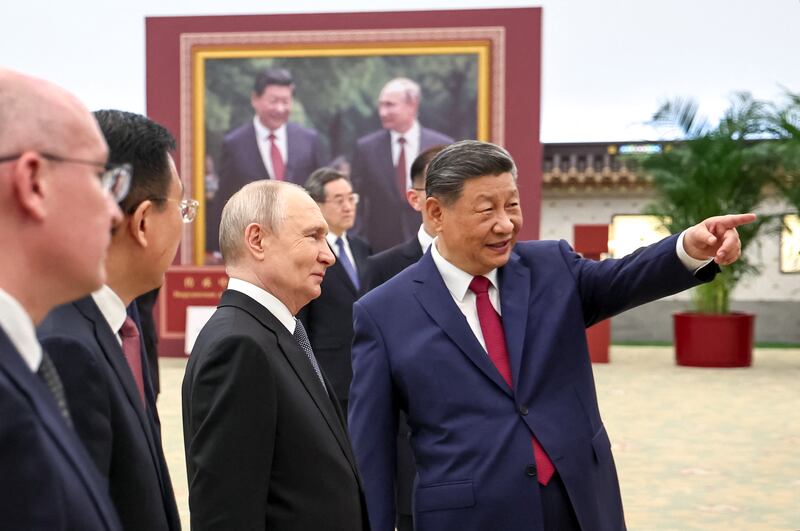
Vladimir Putin’s visit to Beijing this week was planned before Donald Trump postponed his trip to China by a month, so it was coincidental that they took place just days apart. But the timing made a comparison between the two visits inevitable and revealed much about China’s relationships with the United States and Russia.
The protocol on Tiananmen Square was almost identical, down to the bunch of children jumping up and down holding flags and flowers. But the tone and the body language during Xi Jinping’s meetings with Trump and Putin were strikingly different, not least because the Chinese and Russian leaders have met more than 40 times.
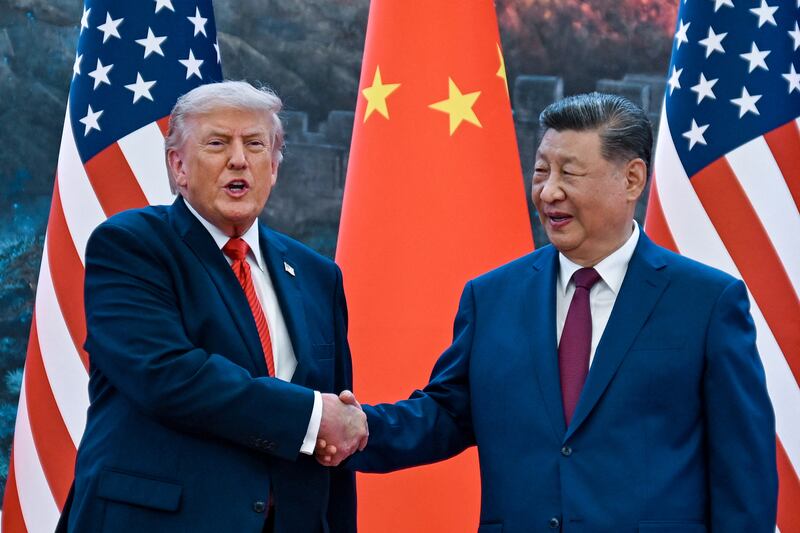
Xi’s purpose during Trump’s visit was to stabilise the relationship between the two superpowers and to de-escalate conflict over everything from the trade imbalance to critical minerals and access to advanced semiconductors.
But there was no attempt to mask the fact that China and the US are locked in a contest over technology, mineral resources and, in the Asia-Pacific region, military superiority.
READ MORE


Putin’s visit, by contrast, was a celebration of the partnership between Russia and China and of the personal bond between the two leaders. Unlike during Trump’s visit, Xi and Putin issued a lengthy joint statement and even appeared together before the press, if only to deliver prepared remarks without taking questions.
The two leaders signed 20 documents, including a number of economic deals, but they have yet to finalise an agreement on the Power of Siberia 2 gas pipeline. Russia and China have been talking for 20 years about the pipeline, which would carry up to 50 million cubic metres of gas a year from Russia’s Yamal gas fields through Mongolia to China. This would amount to about 12 per cent of China’s annual gas consumption.

But the two sides have been unable to finalise a deal until now because of disagreements on price and routing. Russia’s economic difficulties and China’s wish to diversify supply away from the Gulf after the Iran war may have spurred the two sides to move towards an agreement.
In their joint statement, Putin and Xi blamed what they called increasing rivalry and rising tensions in international affairs on “the aggressive policies of a number of states operating within the logic of hegemony and neocolonial thinking”.
Without naming the US and its European allies, they accused them of encroaching on the sovereignty of other states and hindering their development, and condemned the western powers’ use of economic sanctions.
[ Trump accuses his opponents of treason. But it’s clear who the real traitor isOpens in new window ]
“The Parties call for the lifting of illegal unilateral coercive measures that undermine international law and the principles and purposes of the UN Charter, and reaffirm that they will not impose or support sanctions that have not been approved by the UN Security Council and that are contrary to international law,” the statement said.
This affirmation of their commitment to the UN Charter and international law sits uneasily with Putin’s invasion of Ukraine, which violates both. Putin commended Xi for his “objective and unbiased position” on the Ukraine war, but the Chinese leader distanced himself from Russian criticism of the EU’s surge in defence spending.
“The Chinese side notes the Russian side’s concern regarding the European Union’s militarisation policy,” the joint statement said.
The two leaders condemned Trump’s planned Golden Dome missile defence system as a threat to stability and denounced the US administration’s unlawful acts of violence more forthrightly than the EU would think of doing.
“The parties note that actions such as treacherous military strikes against other countries, the hypocritical use of negotiations as a cover for preparing such strikes, the assassination of leaders of sovereign states, the destabilisation of the domestic political situation in these states and the provocation of regime change, and the brazen kidnapping of national leaders for trial, grossly violate the purposes and principles of the UN Charter, the norms of international law and international relations, and cause irreparable damage to the foundations of the world order formed following World War II, as well as the civilisational foundations of interstate communication,” they said.