Main Points
- Two powerful earthquakes have struck Venezuela, killing at least 164 people and injuring almost 1,000 more.
- A magnitude 7.2 earthquake hit about 160km west of Caracas, followed less than a minute later by a magnitude 7.5 tremor, according to the US Geological Survey (USGS).
- The USGS, using predictive modelling to estimate the death toll, said it would most likely run into the thousands, with a substantial probability of exceeding 10,000.
That concludes our liveblog for today, you can keep across all further updates to this story, here.
IMF working with Venezuelan authorities as they assess needs after earthquakes
The International Monetary Fund said it was monitoring developments in Venezuela and would remain engaged with Venezuelan authorities as they assessed their needs.
IMF spokeswoman Julie Kozack told reporters that the global lender was not involved in the debt restructuring announced by Venezuela, but remained in contact with authorities there on the country’s macroeconomic outlook.
She said the IMF stood ready to assist with the debt restructuring as needed. - Reuters
Authorities still assessing the hardest-hit areas
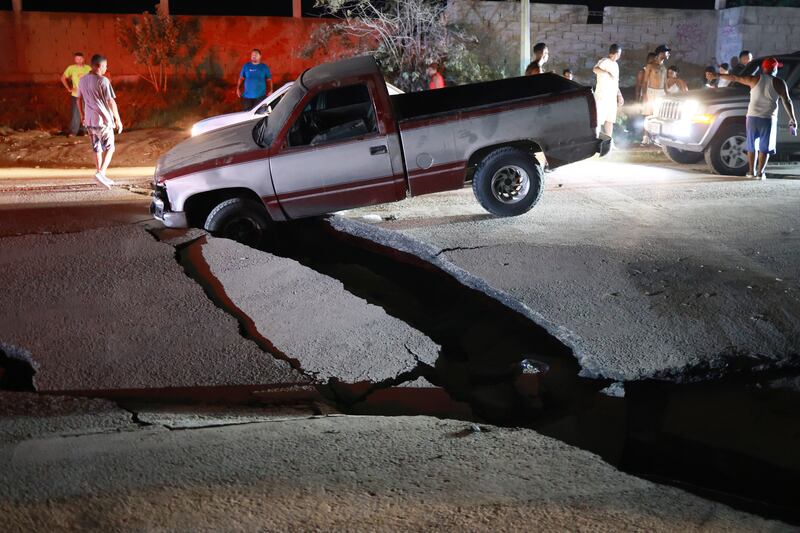
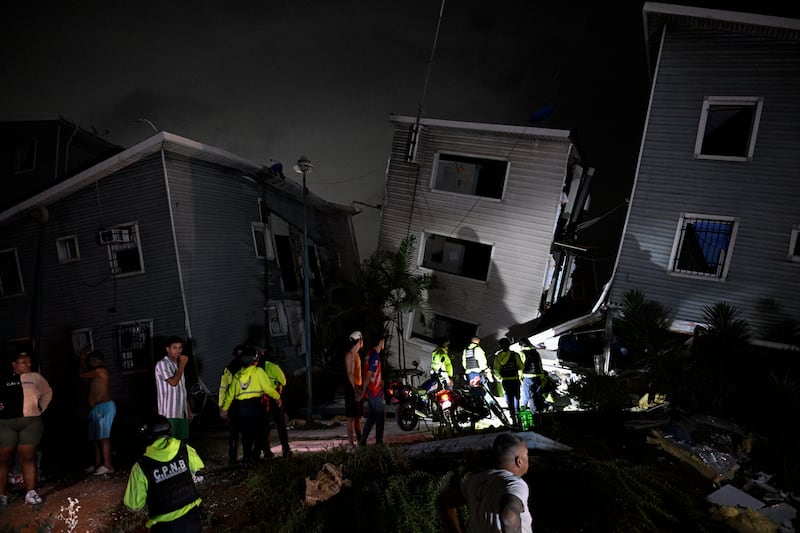
Acting president Delcy Rodríguez said authorities were still assessing the hardest-hit areas, particularly the coastal state of La Guaira, where dozens of buildings collapsed. The quakes impacted at least six Venezuelan states, authorities said.
The affected areas were experiencing outages of electricity, water and gas supply amid continued aftershocks.


Petrochemical complex in Venezuela restarting following quake, firefighters say
Venezuela’s Moron Petrochemical Complex, the country’s second largest in operation, was restarting on Thursday after a preventive shutdown due to quakes that affected the area, leaving infrastructure damages, the chief of firefighters in that area said.
Workers from the complex had been told not to come in while an initial assessment on damages was conducted, sources from that center had said earlier, adding that a leak from a storage tank had been detected on Wednesday. - Reuters
Netherlands sends rescue team to Venezuela
The Netherlands on Thursday said it would send a rescue team to Venezuela after major earthquakes hit the country.
It said it would allocate around €2 million to deploy the team with rescue workers, dogs and equipment.
Venezuela’s acting president Delcy Rodriguez said rescuers from other countries would start arriving in Venezuela early Thursday, including teams from the United States, the Dominican Republic, El Salvador, Mexico and Qatar. China, Brazil and several Caribbean nations have also offered support, she added.
No immediate reports of damage to oil facilities
There were no immediate reports of damage to Venezuela’s oil facilities, according to people familiar with the situation. The country’s refining hub in Paraguaná continued operating normally, while work at the Jose port complex and the Puerto La Cruz refinery was unaffected, one of the people said.
Chevron Corp, the leading private-sector oil producer in Venezuela, said its business remains operational and all of its employees are accounted for. - Bloomberg
Disaster comes at decisive moment in Venezuela’s history
Venezuela is rich in oil and other resources but is still trying to emerge from a decade-long depression that wiped out most of its economic production and led millions to flee the country. Its rescue services have been hollowed out, infrastructure has been left to rot and inflation has reached record highs, compounding the challenges of the recovery.
The disaster comes at a decisive moment in Venezuela’s modern history, less than six months after the US military raid that removed the long-ruling autocrat, Nicolás Maduro. His arrest by US forces in January has transformed the country from a US adversary into an effective satellite state.
The earthquakes are expected to be the worst humanitarian disaster in Venezuela in decades. The hard-hit port of La Guaira is still scarred by devastating landslides in 1999 that are estimated to have killed at least 15,000.
The earthquakes are likely to scramble the complex tussle for power and fortune that has followed Maduro’s downfall. His former vice president, Delcy Rodríguez, took over as president with Washington’s blessing but has faced growing popular discontent — and is resisting calls for new elections.

In the hours after the quakes, Rodríguez called for national unity and pointed to the promises of international aid received by her government, including from US president Donald Trump. Her handling of the disaster, however, will be scrutinized by Venezuelan voters hungry for political change, as well as the emboldened opposition.
Venezuela in recent months has become an arena for investors scrambling to profit from Rodríguez’s campaign to open up the oil and mining industries to Western capital and restructure its pile of public debt, one of the world’s largest. Many foreign companies had cited the poor state of the country’s infrastructure as an investment obstacle, a problem that will be exacerbated by the earthquakes. - New York Times
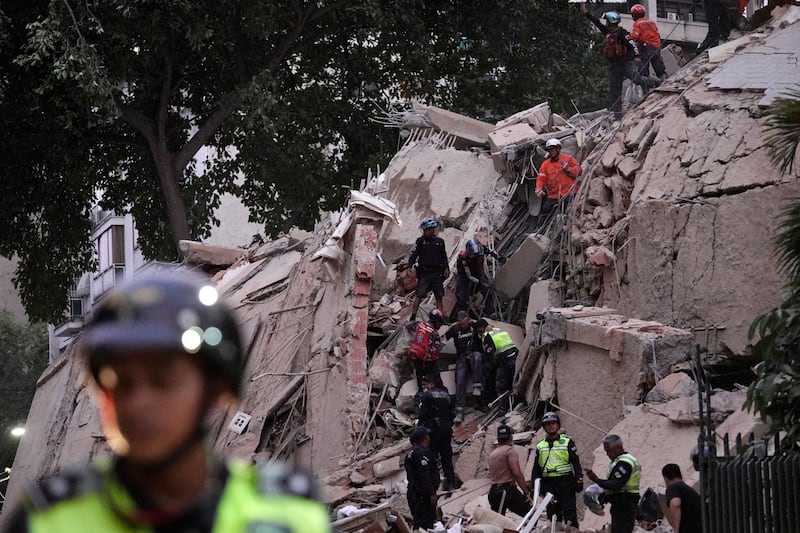
Rescue crews intensify search for survivors
Rescue crews intensified their search for survivors on Thursday as Venezuelans began to grapple with the scale of the devastation caused by the worst earthquakes to hit the country in nearly six decades.
Many people searching for the missing appeared to be ordinary members of the public, rather than professionals. Collapsed buildings, toppled electric poles and debris blocked streets.

During the quakes, people ran from swaying buildings in Caracas, many visibly shocked when they turned back to see destroyed walls that left furniture visible from the street.
Columns of dust rose in two typically busy neighbourhoods in the capital.
“It started off gently and then gradually grew, and in the end, we all had to leave our houses, go outside and gather together,” Caracas resident Hector Ricci said.
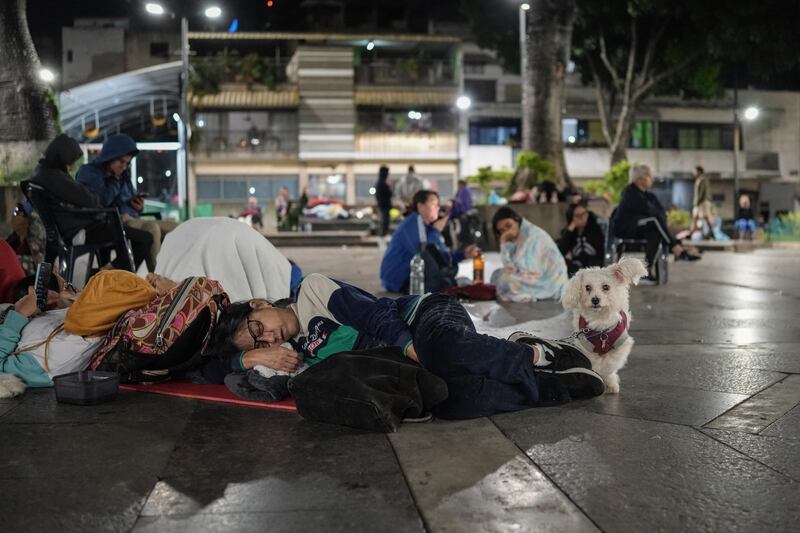
Interior minister Diosdado Cabello urged people to remain outside as aftershocks could further damage structures, and many people stayed on the streets for hours, some sitting on the ground hugging pets as dust gathered around them.
Others spent the night in parked cars, underground stations and other public places.

Parts of the capital lost power and mobile phone coverage, and the earthquakes damaged and closed Simon Bolivar International Airport, the country’s main airport, acting president Delcy Rodriguez said.
In Caracas, underground train services were suspended and natural gas shut off, she said. Classes will also be cancelled for several days, and the ministry of education said some school buildings would be used as shelters and donation centres.
Roberto Gamas, another Caracas resident, said the building he was in “shook from side to side. Unreal. The force was incredibly strong”.
The lack of mobile phone signal in parts of Venezuela deepened the distress of many families, particularly those among the more than 7.7 million people who have left the country during its protracted crisis and who struggled to reach relatives inside the country.
Venezuela opposition leader Maria Corina Machado, herself in exile, sent wishes on X for “strength, serenity, and solidarity”. - AP
Buildings evacuated as far away as the Amazon in Brazil
The quakes were among the strongest to hit Venezuela in more than a century and could be felt throughout the region.
Buildings were evacuated in places as far away as the Amazon in Brazil, about 1,050 miles from Venezuela’s capital, Caracas. The quakes also were felt in Colombia’s Caribbean and northeast regions.
State TV showed three children, covered in dust but alive, pulled from the rubble in La Guaira state, which acting president Delcy Rodriguez described as a “disaster zone” and the area hardest hit by the quakes.
While Venezuela sits near multiple fault lines, its position straddling the South American and Caribbean plates makes strong earthquakes much less common than in other parts of Latin America.
Rodriguez declared a state of emergency in an address to the nation late on Wednesday, saying the quakes caused damage in several states.


She asked health care professionals to report to hospitals to help the injured.
“Dozens of buildings have collapsed there … and we are currently carrying out intensive rescue operations to save lives,” Rodriguez said.
Television broadcasts on Thursday showed rescue workers using power tools to work their way into piles of rubble. - AP
Initial fund of $200 million will be created
Venezuela’s interim president Delcy Rodriguez added that an initial fund of $200 million (€176 millon) will be created using resources from the International Monetary Fund to rebuild infrastructure, hospitals and housing.
Latest death toll count rises to 164 people
At least 164 people have died and 971 were injured the earthquakes, acting president Delcy Rodríguez said.
The latest figures mark a sharp increase from an earlier reported toll of 32 dead and 700 injured.
Authorities fear the numbers could rise further as rescue efforts continue.
Hospitals brace for the injured
At Caracas’ Hospital de Clinicas, staff were asked to double up on the night shift to help treat the injured, a worker there said. Classes were canceled for the rest of the week as authorities began to take stock of the damage.
Venezuela’s oil infrastructure did not immediately appear to be affected by the tremors. Civil protection authorities in Maracaibo, near the large oil hub of Lake Maracaibo, said there were no injuries reported and a worker at the El Palito refinery near Morón - the epicenter of the earthquake - said there had been no damage there.
UK oil firm Shell, which is evaluating developing gas fields in Venezuela, said all its employees in the country are accounted for with no injuries.
One source noted that extended loss of power could hit crude output levels until the service is restored. Venezuela’s oil ministry, state-run oil company PDVSA and its main foreign partner, Chevron, did not immediately reply to requests for comment. - Reuters
Video footage shows emergency workers scrambling over the pancaked debris of a collapsed building
Video footage showed emergency workers scrambling over the pancaked debris of a collapsed building in the capital as night fell, while distraught relatives sought help for loved ones believed to be trapped, Reuters reports.
Several dazed survivors were taken away, some on stretchers.
“When we went downstairs, the scene was like a horror movie,” said Maria Alejandra, a resident from a nearby building, who did not give her surname.
“We had to climb over the rubble and everything. The building superintendent with the baby and all the neighbors coming down. But from that building, I only saw that one family got out.”
Interim President Delcy Rodriguez said the initial casualty figures do not include those from worst-affected La Guaira state, near Caracas and home to the city’s airport, which had been closed.
“Dozens of buildings have collapsed, and we are currently carrying out very intense rescue efforts to save as many lives as God allows us to save,” she said in an appearance on state television just before 1 am local time on Thursday.
“I also want to say that this is a true tragedy. From here, we send our message of solidarity, and to those families who have lost loved ones, we reaffirm our condolences and our support in these difficult hours.”
A website set up to track missing people and posted on X by leaders from the country’s opposition, many of whom are outside of the country, listed more than 6,600 people listed as unaccounted for soon after 2 am local time.
Many Venezuelans were at home when the quakes struck during the afternoon on a public holiday.
“There was a very loud crash. Things fell in the house, jugs inside the refrigerator. I’ve never experienced anything like it,” said Coro Martinez, 56, who lives in eastern Caracas.
The below maps show the shake intensity, and the location of the epicenter, of the earthquakes:
EU activates satellite programme to aid recovery efforts
The EU said it has activated its Copernicus satellite programme to aid Venezuela’s recovery efforts. According to the EU, Copernicus data “can support preparedness and prevention by providing data that helps to identify risks and prevent loss of lives and damages”.
“My condolences to the victims of the earthquake in Venezuela,” Hadja Lahbib, the EU commissioner for humanitarian aid, wrote on X.
“We are following the situation with our field staff and partners there. EU-funded partners are already providing help on the ground, Copernicus is activated & we stand ready to step up assistance.”
Earthquake the most powerful to hit Venezuela since 1900
Wednesday’s 7.5-magnitude earthquake was the most powerful tremor to hit the country since 1900, according to the US Geological Survey (USGS).
The last time Venezuela was struck by a larger tremor was on October 29th, 1900, when a 7.7-magnitude earthquake was recorded in Caracas, the US monitoring service said.
There have been five earthquakes of magnitudes greater than 7 in northern Venezuela or near the coast since 1900, according to USGS.
Seven earthquakes of magnitude 6 or greater have occurred within about 250km (155 miles) of yesterday’s earthquakes over the past century.
The most recent was in September last year, when two earthquakes of magnitudes 6.2 and 6.3 caused at least one fatality and injured more than 110 people.
Here are some photos emerging from Venezuela since the earthquake hit yesterday:

Strong earthquakes are unusual in Venezuela
It’s understood that strong earthquakes are unusual in Venezuela. While it sits near multiple fault lines, its position straddling the South American and Caribbean plates makes earthquakes much less common than in other parts of Latin America, AP reports.
Along the Pacific coast – in Mexico and Chile, for example – earthquakes are frequent; the two countries sit along the seismically active tectonic belt known as the Pacific Ring of Fire, responsible for 90 per cent of earthquakes, according to the USGS.
The two earthquakes that hit today were felt in Colombia, which borders the west of Venezuela.
World leaders offer condolences and support
More world leaders have extended their condolences to the people of Venezuela and offered assistance with rescue efforts.
Spain’s prime minister, Pedro Sánchez, said: “All my support, and that of Spain, to the Venezuelan people following the devastating earthquakes of this evening. Our thoughts are with the victims and their families.”
Pakistan’s prime minister, Shehbaz Sharif, said: “Deeply saddened by the devastation and loss of life caused by the earthquakes in Venezuela. On behalf of the people of Pakistan, I convey our heartfelt condolences to the government and people of Venezuela, especially the families of the victims.”
Offers of help were also made by a number of other governments including the US, Argentina, Bolivia, Brazil, Chile, Ecuador, El Salvador, Mexico, Panama and Uruguay.
Rescuers are searching for survivors after two back-to-back earthquakes hit Venezuela at about 6pm on Wednesday, local time.
A magnitude-7.2 earthquake hit about 160km west of Caracas, followed less than a minute later by a magnitude-7.5 tremor, according to the US Geological Survey (USGS).
At least 32 people are dead and another 700 injured.
The USGS, using predictive modelling to estimate the death toll, said it would most likely run into the thousands, with a substantial probability of exceeding 10,000.
Venezuela’s interim president, Delcy Rodríguez, has declared a state of emergency.
Aftershocks continued to rattle the capital into the early hours of Thursday.
US president Donald Trump has pledged to support Venezuela with aid and personnel.
“The two major earthquakes that just hit the great people of Venezuela are both massive in scale and have left a devastating number of deaths,” said Trump, who ordered the capture of Venezuelan president Nicolás Maduro in a violent raid in January, said in a social media post.
We’ll have live updates here this morning as the situation unfolds.