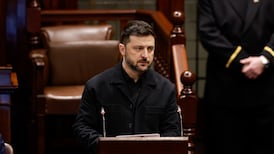
A haunted-looking Volodymyr Zelenskiy came to Dublin this week to thank the State for its help in the three years since the all-out invasion of Ukraine – and to appeal for the Government to use its voice in support of EU proposals to finance and arm his country into next year, as it continues its fierce defiance against a bigger and brutal adversary.
Ireland has stood up well in support of Ukraine since 2022, accepting more than 120,000 refugees (about 80,000 or so remain) and contributing nearly half a billion euro in supplies, equipment and other help to the beleaguered country.
We insist on maintaining the slightly preposterous facade of not sending “lethal” aid to Ukraine, as if the fuel that makes the tanks go can somehow be pacifist, in contrast to the “militarist” shells they fire.
This is because we are “militarily neutral”, you understand, though we are not “politically neutral”. Whatever that means. You’d wonder what the Ukrainians make of it in private.
READ MORE



Taoiseach Micheál Martin promised to use Ireland’s EU presidency next year to advance enlargement of the union, and Ireland has been among the most vocal supporters of Ukrainian membership. That’s of real value to Zelenskiy as he battles to save his country from being battered between the hammer of Russian aggression and the anvil of US indifference, and to give it a viable future.
It seems increasingly likely that the question of Ukraine’s ultimate survival as a sovereign and free country will come down to what the EU decides to do. A crucial summit of EU leaders on the issue takes place in less than a fortnight in Brussels. This is why Zelenskiy was in Dublin.
I wonder how much help we can be. It is hard for EU allies to take Ireland seriously on security and defence matters.
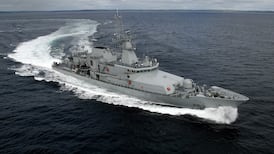
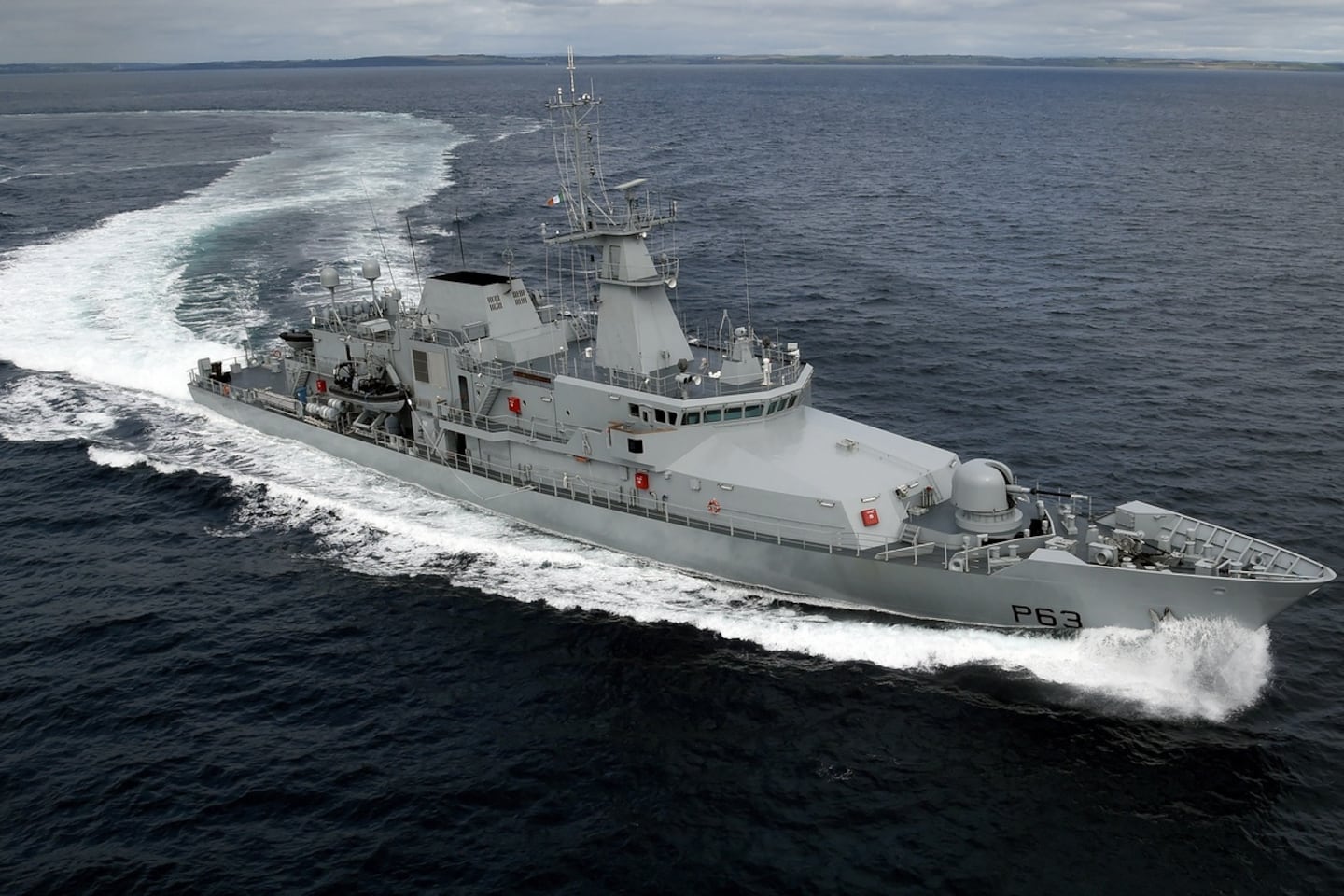
This is emphatically not because Ireland is a neutral country. Nobody minds that we are neutral. But they do mind that we are not contributing meaningfully to the EU’s defence. They do mind that we are not capable of defending ourselves. They do mind that we have to rely on the expensively maintained armed forces of other countries – including, principally, the British – to defend the critical European infrastructure that runs through our waters in the shape of transatlantic cables. And they really mind that while not doing any of this, we see fit to lecture others about “peace”. And they really, really mind that we do and don’t do all this while enjoying the fruits of most prosperous economy in Europe, buoyed by tax revenues from the US companies whose lucrative data flows through those same cables.
We love to tell ourselves that we are renowned the world over as a neutral country, a “voice for peace”, on the side of right, not might. There is some truth to this. We have valuable connections to parts of the global south where our mostly non-colonial past, and our history of missionary activity, has some currency.
But among EU governments and the people who make policy decisions in our part of the world, many see us as freeloaders who combine an ability to benefit from the EU with an unwillingness to do our fair share in defending it – whilst at the same time striking a pose as moral leaders.
These are some of the thoughts that will be going through the minds of many EU leaders when, later this month, Micheál Martin speaks up in support of Ukraine and of the need for the EU to step up its support financially, politically and militarily.
It is hard sometimes to make the leap of imagination to see the world as others do. Hard but necessary.
Membership of, and enthusiastic participation in, the EU has been the single most important policy of this country for the last half century. Most people would agree that on balance the benefits – especially in recent decades – have been obvious, significant and widely distributed. Now the character of the EU is changing in response to the Russian invasion of Ukraine, ongoing Russian aggression directed at EU members and the stepping back of the United States from its traditional role as the guarantor of European security. Defence and security are becoming core parts of what the EU does. This will inevitably mean working closely with Nato, and that will happen no matter what Ireland thinks about it. But we cannot remain unaffected by it.
You think this is a dangerous fantasy of bushy-eyebrowed colonels in bunkers, bent on the “militarisation” of the EU at the behest of the “military industrial complex”, as someone once put it?
Ask the Poles. Polish railways, including lines used for military and logistics transport to Ukraine, were sabotaged last month, leading the authorities to deploy 10,000 troops to guard critical infrastructure sites.
[ The triple lock - a guardrail of neutrality, or an abandonment of sovereignty?Opens in new window ]
Ask the Baltic Republics of Latvia, Estonia and Lithuania, habitually targeted by Russian-sourced disruptions by cyberattacks, drones, balloons around airports and outright buzzing by aircraft.
Ask the Germans. No country in Europe less wants to contemplate a conflict with Russia. But it is facing up to the once unthinkable. The head of its intelligence service recently told a parliamentary committee that Russia is determined to test European borders and resolve, adding that Moscow “will not hesitate, if necessary, to engage in a direct military confrontation with Nato”.
Ask the Ukrainians.
All of this makes the world a more frightening place. Is an outright conflict between Nato – or at least the European members of Nato – and Russia now likely? Let’s hope not. But it looks more possible than at any time since the height of the cold war. History teaches us that only strength deters menace. It all makes fretting about the triple lock seem faintly ridiculous, doesn’t it?