
I went for walk by the Dodder this evening and was surprised to see this unusual visitor. This was the stretch between Rathfarnham Road and Orwell Road, a bit past the weir. After its soggy dinner, it bounded onto the north bank and vanished into the wooded area. Karyn Walsh, Terenure
Sika deer are everywhere. They have now been designated as an invasive alien species of European Union concern, having been included in the most recent update to the European Union list in July 2025. Not that that changes things on the ground here at the moment anyway. According to Minister of State Christopher O’Sullivan in February 2026, there is no requirement for sika deer to be culled en masse as a result of the listing. Deer are very common along the upper reaches of the Dodder in Wicklow, and they can follow it right into Dublin, browsing on the trees and shrubs on the riverbanks.
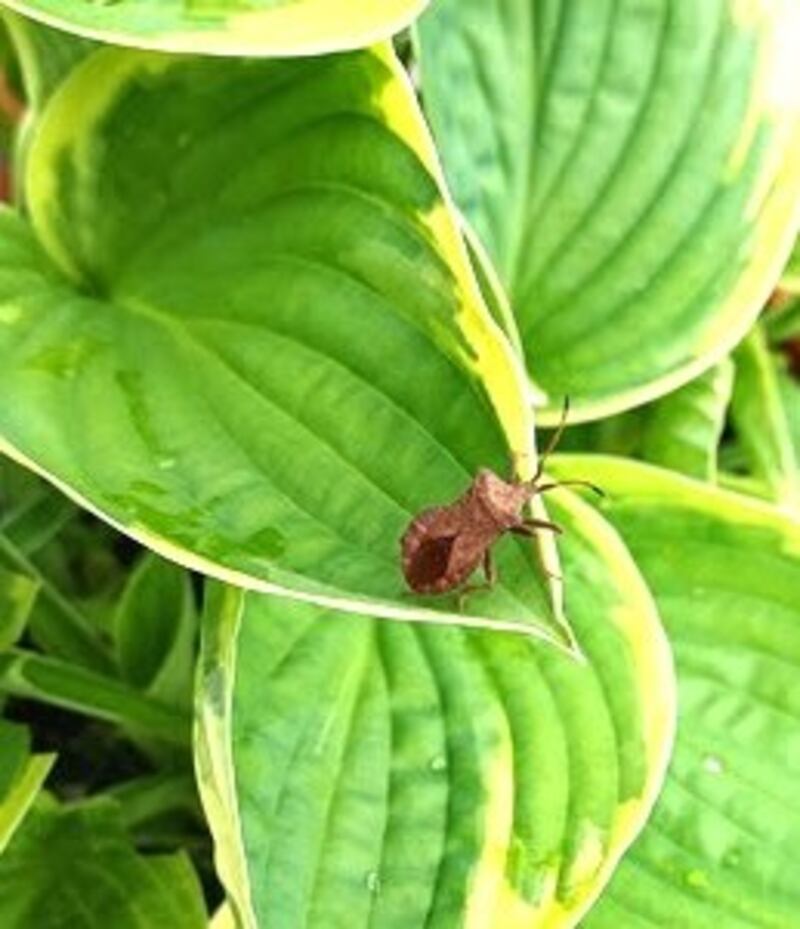
What is this sitting on my hosta in my garden in Douglas, Co Cork. Ellen Johnston, Co Cork
This is one of our 17 species of shield bug – Coreus marginatus – the dock shield bug. Adults can be found throughout the year, while the nymphs develop from June until August. Both adults and nymphs feed on the leaves and seeds of dock leaves, so this one was only resting in your hosta plant. They have been recorded in Kerry, Cork, Waterford and Wexford so far.
READ MORE


For the three years we have lived in our current home, a pair of spotted flycatchers have arrived each May to nest in a wisteria by our backdoor. Are they likely to be the same pair returning each year? This year we noticed at least three adults in the garden. Patrick Burns, Mullaghbawn, Co Armagh
Spotted flycatchers are summer visitors to Ireland, arriving here usually during the first week of May from their wintering grounds in southern Africa. Their average lifespan is two years although ringing records have shown us that the oldest known individual was eight years old. They return to where they were born so you may have adults from two successful nesting years. Keep an eye on how the threesome get on.

I volunteer at Florence Court kitchen garden in Fermanagh. One of our team met this character leaving one of the outhouses. Can you identify it. James Armstrong, Enniskillen, Co Fermanagh
This is a ground beetle – Carabus granulatus ssp. hibernicus - a separate Irish subspecies. You should be delighted to have it in the vicinity of your kitchen garden, as both itself and its larvae eat slugs and small invertebrates as well as earthworms, when they can find them. The wonderfully patterned wing cases are characteristic, although the species is flightless. It is quite a common ground beetle, favouring wet habits such as bogs, marshy places and the margins of ponds. It overwinters as a larva.

This was the victim of a local cat that roams in my garden, usually stalking close to the bird feeders. I think it is a pygmy shrew. The same cat has been seen before playing with a dead shrew. Nancy Roe, Galway
Cats do most of their depredations in the early morning from sunrise until about 8am when all is relatively quiet. They can escape out of the house through cat flaps and catch unwary fledglings which, having left the nest, are living in the undergrowth of garden being fed by their parents and are quite defenceless. Shrews, which are carnivores themselves, exude noxious liquids through their scent glands, which makes them unpalatable to cats and foxes (but not owls). However, this doesn’t stop cats from killing them.
Please submit your nature query or observation, ideally with a photo and location, via irishtimes.com/eyeonnature or by email to weekend@irishtimes.com
Please submit your nature query or observation, ideally with a photo and location, using the form below or by email to weekend@irishtimes.com


