

The world’s attention alighted on Ireland this week for two reasons: firstly, it’s August and all other news has gone to its beach house to relax for the rest of the month. And secondly, because Daniel Kinahan, a figure of international importance, was extradited to Dublin and charged.
There is no crime in this interest, other than possibly the alleged crime of directing a criminal organisation, subject to the decision of the Special Criminal Court and remembering always the presumption of innocence.
But while Irish outlets worth their salt have been following the ins and outs of Kinahan, associates and antagonists for well over a decade, some international colleagues are trying to get up to speed quickly.
Take the BBC, for example. On Overheard’s habitual descent through the infernal circles of social media, we noticed the Beeb had posted a link headlined “What we know about suspected crime boss Daniel Kinahan”.
READ MORE


With it was a split image. On one side was the scene outside the Central Criminal Court near the Phoenix Park, where the hearing took place last Sunday. On the other was a close crop of someone who isn’t Daniel Kinahan. Judging from the similarity in face-mask-and-baseball-cap attire to the armed gardaí in the other shot, we imagine he was part of the security detail for Kinahan’s transfer to Portlaoise.
Kinahan was in fact in the photograph – but more blurry, behind the shoulder of the disguised law enforcer. The BBC cropped him out entirely.
What do they know about suspected crime boss Daniel Kinahan? Certainly not what he looks like.

Holy war between Lidl and SuperValu
The new cold war rumbles on in rural Ireland as Lidl has once again had planning permission refused for a new supermarket in a village that already has a SuperValu.
On the face of it, the people of Monksland, Co Roscommon, seem quite united in their desire for no-frills grocery provision. The overwhelming majority of planning submissions, including some from TDs, and several petitions, were in support.
Monksland is a village just west of Athlone, across the Shannon and over the Leinster-Connacht border. It is a boomtown, with the district in which it sits growing from a population of 1,000 in 1981 to 2,500 by 2006 and 5,282 in the most recent census. There is a Novo Nordisk facility there making a chunk of the world’s Wegovy, an in-demand weight-loss drug.
“The local area has only one supermarket, which is a premium SuperValu outlet with very high prices,” one resident’s submission read, capturing the sentiment of a number of locals. Others highlight the fact that many residents already travel by car to discount supermarkets farther away, and that Roscommon town has no problem accommodating diverse retail options.
No luck. Roscommon County Council rejected the planning application. Its “dominant, utilitarian structure” – the supermarket – lacks architectural merit, the decision read. Furthermore, it would be “dominated by vehicular access” and would not be “conducive to creating a vibrant centre and sense of place in this core area of Monksland”. Fair points: it’s a Lidl.
But many locals still believe the pros outweigh the cons, and there was even divine intervention this week: the parish priest, Fr John Deignan, issued a social media statement saying: “To whoever holds the ultimate decision-making power: please look beyond rigid paperwork, consult properly with the community, consider the actual scale of this community, and finally plan well for its future.”
Lidl has appealed the decision.
Navy goes private
The days of the press gang are behind us: no longer can the navies of the world rely on the cudgel or the shilling at the bottom of a tankard to drive the work-shy men of a nation into service.
As a result the Irish Naval Service is resorting to the private sector.
“Due to a short-term lack in skilled Armament Artificer Instrumentation (electronic technicians)…” it advertises, “the Naval Service requires a contracted service assistance to provide technical support to the existing staff.”
Three lucky landlubbers will be expected to help fix things up, including electro-optical control systems, which is to say various sensors, lasers and screens that probably go “boop” and keep an eye on potential threats.
Overheard’s understanding of the seafaring life derives largely from fiction and film, with tasks including getting revenge on a whale and hammering planks to the hull to repair cannonball damage.
On this occasion, though, scurvy is unlikely to be a problem: the posted hours are 9am-4.15pm Monday to Friday, excluding public holidays, with a provision for time in lieu if out-of-hours work is required.
Cutting hedge
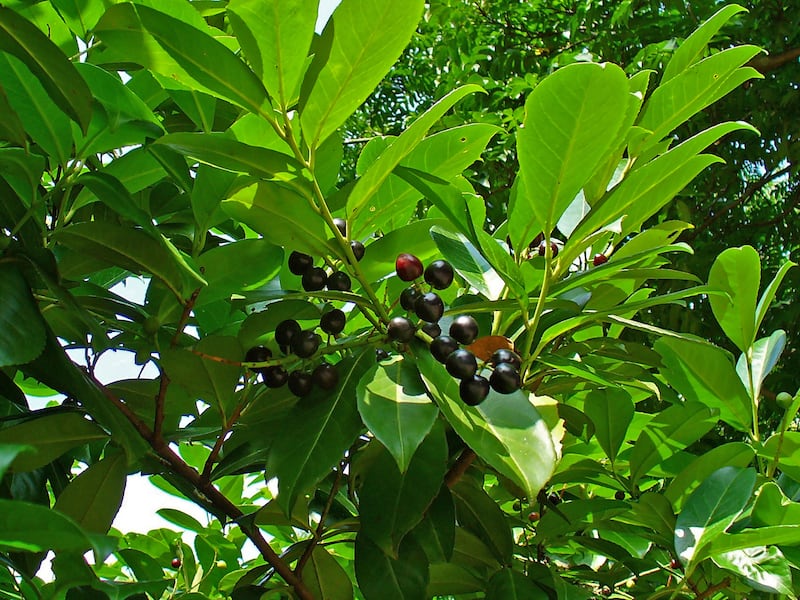
The scores are in: the National Biodiversity Data Centre reckons that cherry laurel, the well-known hedge plant, is a problem. A risk assessment produced at the request of the National Parks and Wildlife Service that found the spreading shrub to poses “high risk” to biodiversity.
Part of the problem is that people keep planting it in their gardens, from which it spreads by seed and through green waste, which is apparently “frequently discarded directly into or adjacent to semi-natural habitats”, according to the assessment.
Campaigners immediately called for a ban on its sale to the public. “It is suffocating our native woodlands, outcompeting native flora and putting immense pressure on fragile ecosystems across Ireland,” Oisín Ó Néill of the Irish Wildlife Trust said.
Suppliers are thus far unmoved. The Arboretum, a garden centre group, recommends one variety as “an excellent choice for dense, year-round screening that brings structure and richness to the garden”, while Caragh Nurseries, a supplier in Kildare, praises the “emerald fortresses of timeless grandeur” for their “vigour”.
The qualities that make it appealing as a privacy hedge are the same ones that make it a problem in the wild: it forms dense thickets that block out light and stifle competition.
One property owner that might need a hedge fund to pay for removal if a crusade is ever launched against cherry laurel is the State. Even the stately Phoenix Park, one of the better-groomed properties, has some, while wilder woods fare worse.


