

A recurring theme of this column over the years has been that we already have, at hand, almost all of the solutions we need to cut emissions quickly – the wind turbines, heat pumps, electric vehicles and cycle lanes, and the changes to how land is used, and how food is farmed and eaten.
We also already have an alarmingly detailed scientific understanding of the problem, its causes and impacts. So why are emissions still rising? A lack of knowledge is clearly not the reason.
Even though we have solutions at hand, their implementation in practice faces many barriers that are varied and deeply context-dependent. These barriers, for the most part, do not lie in physics or engineering but in institutions, budgets, power relationships, planning systems, communication and law. Therefore, no single discipline or profession, however deep its expertise, contains a complete toolkit to navigate these barriers.
An orchestra is a useful analogy. A symphony cannot be performed by a single virtuoso, however brilliant, nor by a room full of violinists. It needs dozens of specialists, each a master of their instrument, playing from a shared score. And it needs a conductor, someone who probably cannot play the oboe, but who understands what each part contributes and can bring them into time with one another to produce something that no musician alone could.
READ MORE


Our universities excel at producing virtuosos. They are far less good at producing conductors.
Our third level system is built around a model of ever-deepening specialisation. This is how much of human knowledge has advanced in the past, and we will always need engineers, ecologists, economists and ethicists who know their field to its frontier. But as expertise deepens, so does the gulf between disciplines. Their languages, tools and mental models of the world diverge until experts in even neighbouring fields struggle to relate or talk to each other.
The danger of specialisation when dealing with ultra-complex challenges like the climate crisis is that each discipline, looking at a shared problem, sees only the part it is equipped to see, like the parable of the blind men and the elephant.
Within economic models, for example, the most efficient way to address climate change is through carbon taxation. To engineers, the answer is to build the right technology and infrastructure. To a legal expert, it is a matter of legislation. To a behavioural scientist, nudging individual behavioural change is needed.
[ Heat pump installations must increase twentyfold ‘to meet green targets’Opens in new window ]
Each solution is individually correct. But as the cliche goes, to someone holding a hammer, every problem looks like a nail. Alone, without a broader appreciation of the whole picture, they can be dangerously blunt and insufficient instruments.
To turn knowledge into action, a broader toolkit is needed: the ability to understand the language of a range of experts; to judge which knowledge is relevant to a given problem and context; to communicate, lead and manage change within complex and contested spaces, and to have humility, creativity, and resilience in the face of seemingly intractable problems.
If anything, the case for this interdisciplinary skill set has grown stronger in the age of generative AI, when information is abundant and easily retrievable. The challenge is contextualisation, integration and application of this information.
In University College Cork this September, we are launching a new kind of degree that aims to train graduates with these skills. The BSc Sustainability is itself the product of interdisciplinary collaboration, drawing on academic expertise from philosophy to chemistry, from law to engineering. Students will be grounded in the foundational disciplines that sustainability requires – science, economics, law and the humanities – and will specialise in one thematic stream.
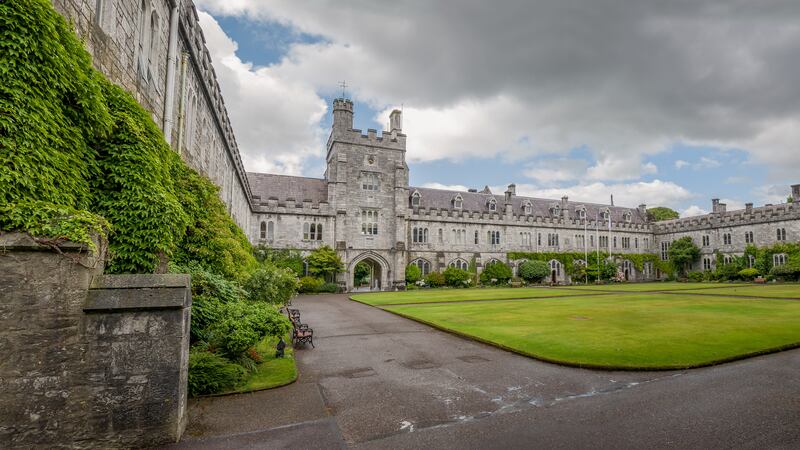
But the defining feature of the degree is that it puts knowledge into action by training students in the set of integrative skills that are necessary to bring about real, positive changes towards sustainability – systems thinking, data analysis, leadership and communication, taught through real, local sustainability challenges drawing from the campus and local area.
Employers have told us that they want and need graduates with these skills, as well as engineers, accountants and lawyers. We are setting out to train conductors as well as musicians.
We will always need our virtuosos, but the great challenges of this century are not unresolved due to a lack of specialist knowledge, but due to our inability to combine and apply that knowledge.
To play its role, modern higher education must organise specialised knowledge around solving societal problems, rather than around departmental boundaries.
Prof Hannah Daly is Professor of Sustainable Energy at University College Cork


