

In 1975, Margaret Thatcher became leader of the UK Conservative Party, Éamon de Valera died and David Beckham was born. Bill Gates and Paul Allen set up a company called Micro-Soft. Druid Theatre Company was founded, and The Bothy Band released their astonishing first album.
Bringing phenomenal skill, energy and power, layered arrangements, harmonies and fusions to traditional Irish music, the album was simply titled 1975. Michael Keegan-Dolan was six years old.
“I remember my parents getting ready to go and see The Bothy Band in Sligo,” the choreographer and dancer says. “I got left behind in the B&B. I remember them being excited and dressing up. I knew then from their body language – especially my father, who didn’t really have much interest in Irish music – that there was something going on, that this was something significant.”
Four years later, in March 1979, I went to see The Bothy Band with my own parents at the National Stadium in Dublin. My chief recollection is the energy: we were all breathing the same beat. Rhythm poured from the stage, and it was electric.
READ MORE


Later that year The Bothy Band would break up, but no one at the venue that night had any sense that the magic these people were creating would ever end.
Now Keegan-Dolan’s company Teach Damhsa has made a new work, soundtracked by that album in its entirety. The piece, called 1975/Naoi Déag Seachtó Cúig, will open to a brown curtain, Keegan-Dolan explains as we watch a run-through at the company’s base on the Dingle peninsula, in Co Kerry.
Brown does seem to colour 1970s Ireland in the mind, but when 1975 bursts on to the stage of Cork Opera House as part of the city’s Midsummer Festival, audiences will see the brown quickly banished. Seven brightly suited dancers will appear, to begin a wild ride through the loves, losses, joys and passions of an era more frequently remembered for its darker narratives.
There will be a game of spin the bottle, and couples will flirt, pair up and stand up. They will jig, and they will reel. It is sexy and intense, proud and vulnerable.
The 1970s in Ireland were similarly multifaceted. There was mass emigration, unemployment, the tragedy of the Troubles. Three members of the Miami Showband were killed following a gig in Banbridge, when their bus was stopped by loyalist terrorists. An IRA bomb at the Hilton Hotel on Park Lane in London killed two; a UDA bomb at Dublin Airport killed one.


In one passage the dancers create shapes with their bodies, and while on one hand you could read it as the intricacies of human relationships made visible, it might also remind you of FE McWilliam’s Women of Belfast series of sculptures, depicting women flung into wild shapes by explosive blasts.
“I do everything slightly backwards,” Keegan-Dolan says. He prefers to work instinctively, with accumulated knowledge and wisdom expressed through movement and music. Not everything we know and understand happens in words.
“I wanted to make a piece to an album,” he continues. “And I thought, if we’re going to do it, we’d better pick a good one.” Johnny Cash’s At Folsom Prison was in the frame for a while, but the choreographer’s thoughts kept coming back to The Bothy Band.
The album’s 50th anniversarty, last year, helped crystallise the choice, as the piece became more than an expression of a single moment: a celebration of the eras since. As Keegan-Dolan puts it, “The Bothy Band made possibility through their music.”
That possibility, he says, is there in today’s sense of confidence in Irish culture. In 2011 Keegan-Dolan’s dance company at the time, Fabulous Beast, was making Rian with the musician Liam Ó Maonlaí. “We talked a lot about Ó Riada Sa Gaiety,” he says of the album recording of Seán Ó Riada’s final public performance, in 1969.
Keegan-Dolan’s father had worked with TK Whitaker. “He was one of those civil servants that went to France with Whitaker to learn about how the Europeans were doing business, and I guess, in some ways, culture.
I hadn’t heard that recording in so many years, and every moment was a surprise. For it to come blasting out of speakers, and the dancers blasting and lepping in the air. Getting your heart beating faster, like when I was playing with the lads back then
— Tríona Ní Dhomhnaill
“So when I think of 1975 I think of those men in 1969, who had grown up in rural Ireland, who had moved to urban Ireland, who are now trying to build a nation and an identity. Trying to find their confidence, their straight back, as opposed to their bent back.”
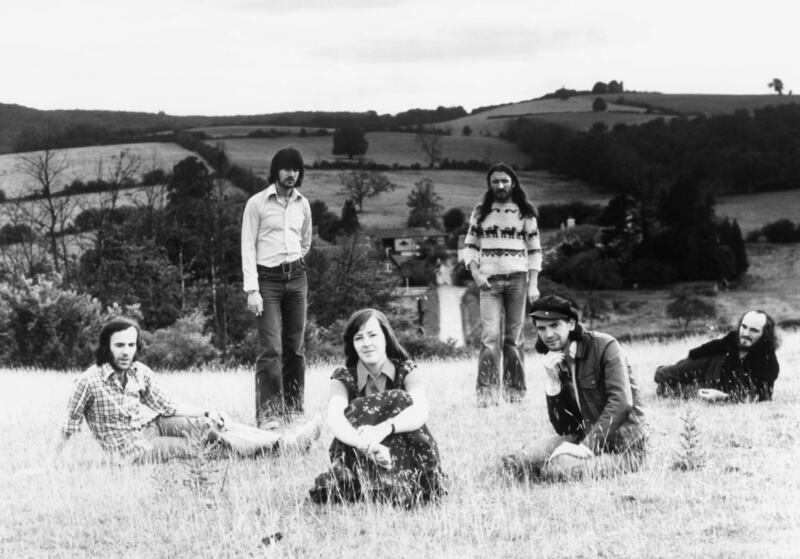
And then came The Bothy Band. As people such as the choreographer’s father were trying to make Ireland a modern society, with better services and systems, the original-line up of Paddy Keenan, Matt Molloy, Tommy Peoples, Dónal Lunny, Tríona Ní Dhomhnaill and Mícheál Ó Domhnaill were drawing on the older rhythms of Ireland, but giving them a fresh, visceral force.
“The real power of this nation is more in the piping of Paddy Keenan, in the stories of Tríona Ní Dhomhnaill,” Keegan-Dolan says. “And when the two start to play, to speak to one another, it creates this really remarkable theme to be part of.”
Were the band’s original members aware of what they had created? “I wouldn’t say we knew we were on to something,” Ní Dhomhnaill says. “We didn’t give a ...” She pauses, possibly seeking politeness. “Well, let’s say we didn’t care what anyone thought. We were living out of this red Ford Transit, and we travelled the breadth of Ireland, England, Scotland and Wales.”
Ní Dhomhnaill was at Teach Damhsa earlier this year when a smaller group of dancers performed 1975 as part of Féile na Bealtaine. “I was in the front row, the sweat was pouring off the dancers, and I was so moved. I was flabbergasted. I was nearly in tears.
“I hadn’t heard that recording in so many years, and every moment was a surprise. It expressed all those years ago, when we first got together.

“And for it to come blasting out of speakers, and the dancers blasting and lepping in the air. Getting your heart beating faster, like when I was playing with the lads back then.”
Ní Dhomhnaill’s voice at the end of the phone carries emotion, and she brings a warmth to her talk, closing the distance so that it is as if she is in the same room.
Keegan-Dolan’s dance catches all that. There are times, watching the run-through, when I can’t stop smiling. I definitely can’t prevent my foot tapping – but why would you want to?
“Irish music is so layered,” Rachel Poirier, Keegan-Dolan’s wife and long-time collaborator, says. “The album is 50 years old, so you go back into memory, the times then, the times now. It’s a whole magic trip.
“There’s a mixture with The Bothy Band. An amazing freedom, and at the same time it’s so focused. Maybe the layers are from the combination of instruments, a bit like classical music in a way, but there are so many parts of it you can boogie to.”
She describes watching videos of The Bothy Band playing. “They’re not trying to put in a comment, to tell us something. They were living it and breathing it, so you can feel it. They’re just doing what they needed to do.”
Last year Keegan-Dolan ended his relationship as an associate artist with Sadler’s Wells, in response to the London dance theatre’s partnership with Barclays and the bank’s connections to the arms trade and the Israeli government’s actions in Gaza.
“There was a lot leading up to it. We had many meetings,” he says. “I kept talking to the director of Sadler’s Wells, and we kept hoping they would revisit that sponsorship relationship, because once you’re out, you’re out.
“I was trying to stay in the conversation, but I began to notice a negotiating technique where they kept saying, ‘Let’s just keep the conversation going, Michael.’ I got the feeling they were worried, but in the end the only other one who left was [the choreographer] Oona Doherty, from Belfast. So it was the Irish who put it up to them.”
Irish people, he says, have a quality of strength.
Having held the Sadler’s Wells position since 2011, he is sanguine about his decision. “It was a good relationship. They had coproduced and presented a lot of my work, and had been very supportive and very generous. It wasn’t easily ended. Sadler’s Wells has probably not been affected in any way whatsoever,” he says. “But, ultimately, change can happen. It’s a matter of time, and you cannot do nothing.”
It is a loss for Sadler’s Wells: Keegan-Dolan is a phenomenal choreographer. The company’s show Mám, with Cormac Begley, is on an extensive world tour; How to be a Dancer in Seventy-two Thousand Easy Lessons is touring; and new partnerships are opening up.
Lorraine Maye of Cork Midsummer Festival approached him to coproduce 1975 with Cork Opera House and, in Paris, Théâtre de la Ville, where the company will perform in December. Sam Amidon is returning later this summer to re-explore Nobodaddy, the pair’s recent collaboration.
Back at Teach Damhsa, the dancers, an international team of regular cast members, are warming up. The energy rises in the room as, outside, June throws its worst weather at the windows at the edge of the Atlantic. Wild flowers rustle their colours.
Dance shoes and clapping sound the air as any inhibitions that may have gathered overnight are shaken off. A conga line forms, and everyone is as goofy as if this were a combination of school holidays and a late night at a family wedding.
But then, instinctively and collectively, co-ordination comes into the movements and I am reminded all over again that these are some of the best contemporary dancers, in one of the most exciting companies in the world. Afterwards, we will break for pea soup made by the actor Cameron Brady, who is visiting for the week, having met Keegan-Dolan in Belfast. Teach Damhsa is quite the place.
As the run-through unfolds, Keegan-Dolan tweaks, creating subtle shifts. “Take your time ... I was wrong before. Gorgeous ... Slower here. Try and stay centred.”
In quiet asides he talks me through what will happen on stage in Cork. After that brown curtain lifts, white and black backdrops will signal the shift between the A and B sides of the original album. Generations growing up will not know about A sides and B sides, or the physical time constraints of a vinyl LP, where the medium itself concentrates the mind. The dancers’ vivid suits will mingle the conventional with the unusual and the extraordinary.
Was this the 1970s? It was, just as much as all that brown. Sometimes, so the song goes, you don’t know what you’ve got till it’s gone. But sometimes it hasn’t gone at all. It’s there, waiting to be remembered, drawn on, heard and seen again in all its scintillating glory. This is all, after all, part of who we are.
Watching the performance in April opened up memories for Ní Dhomhnaill too. “Imagine if you were one of those players. That whole time, the music we made together ... we became very fast a family.
“I was flooded with fantastic reminisces. I felt like I was dancing with them and revisiting every detail of the music and what we did. That track, Julia Delaney, I’d forgotten I played whistle on it. I love that.”
She speaks of bandmates, family, friends now gone: Tommy Peoples, her brother Mícheál Ó Domhnaill, Dolores Keane, Moya Brennan. “I would have stood in the snow to listen to them. They were gorgeous times.
“When we were in full flight, that was when you almost couldn’t breathe in fear of losing that high-flying spark – like electric. Nearly lifting off the stage.”
1975/Naoi Déag Seachtó Cúig is at Cork Opera House, as part of Cork Midsummer Festival, from Thursday, June 18th, until Saturday, June 20th


