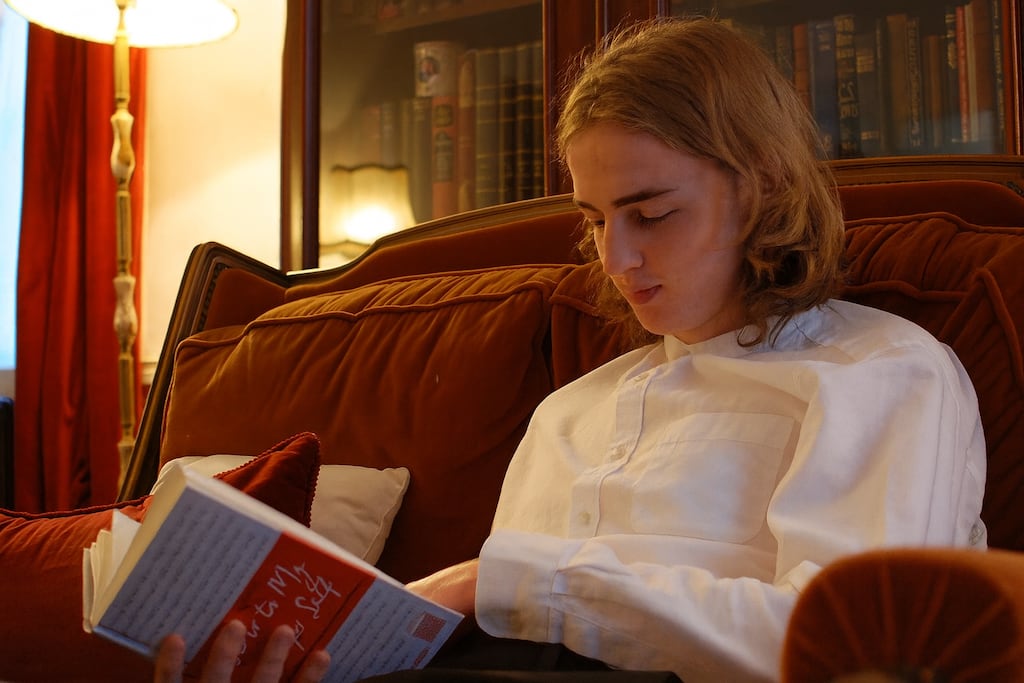
As an Irish man who has spent much of my life abroad, Seamus Heaney has been my companion, helping me grow up into literature, Irishness and, ultimately, myself.
When I was 10 years old, an Irish boy living in Paris, my mother dragged me to one of Heaney’s last public readings, in June 2013.
Despite protesting that I’d be bored and didn’t even know who Heaney was, my mother insisted that I go, on the basis he was a very famous Irish poet and that I’d thank her later.
Before I knew it, I was standing in the Irish Cultural Centre’s courtyard, lined by limestone facades and chestnut trees. Around me were hundreds of people of different nationalities, all excitedly chattering about what was to come.
READ MORE


As an Irish boy growing up abroad, it felt special that all these people had gathered to see an Irish person speak. Though at that point I knew nothing about Heaney, I also began to feel a rush of anticipation.
Back then, the only times I got to connect with Ireland was through attending Six Nations matches at the Stade de France or singing along to Fairytale of New York at Christmas. Now, I had a front-row seat to discover more about my country.
When Heaney finally approached the podium, the room went quiet. He began to read and the audience leaned in, as though pulled towards his voice by a single breath. Heaney recited poems that spanned his career, from On the Gift of a Fountain Pen to Miracle.
At one point in the reading, a blackbird in the chestnuts sang a countermelody, prompting Heaney to harmonise, reciting The Blackbird of Belfast Lough from memory. This moment showed me the power of poetry to speak to the present moment, to re-establish its relevance again and again, pre-written yet alive.
Everyone left as though they had fragments of his wisdom in a goody bag.
Just a couple of months later, my mother walked into the livingroom to tell me Heaney had died.
The 30th anniversary of Heaney’s Nobel Prize award ceremony this week has caused me to reflect on what the poet has taught me about literature and Irishness.
Through his recital, I had the privilege to discover his works for the first time through him reading them to me. Even though I didn’t understand much at the time, his readings in their cadence and intonation stayed with me.
As both an Irish boy growing up abroad and a student of literature living across several countries, Heaney made his impact, cropping up again and again in different times and places of my life.
As I moved into early adolescence, my mother, an English teacher herself, reintroduced me to Heaney’s poems. His naturalist imagery connected with me, bringing back memories of digging potatoes and picking berries with my mother in west Cork. It was the first time that poetry felt personal while showing me how shared experiences can be represented romantically and bind us as a people.
When I was old enough to be taught Heaney’s poetry, it was in a Parisian international school’s classroom with an irreverent Canadian teacher who had lived in Dublin.
My teacher felt strongly that understanding Irish culture was necessary to understand Heaney. However, that principle was hard to implement because my classmates, all from rich cosmopolitan city circles, could not imagine cutting turf or digging potatoes.
He even brought turf into class for the students to touch, but it never quite connected with the haves and have-yachts. They spoke of his down-to-earth images as though they were the height of poetic abstraction.
In their lack of connection, I realised how literary analysis can struggle to get a reader beyond lived experience when it comes to feeling a poem. Nonetheless, some students related to the coming of age, the loss of innocence, as the poems extended beyond cultural boundaries to speak to a shared humanity.
When I transferred to an English grammar school in Kent, I came across Heaney again. This time, rather than finding the rural imagery hard to grasp, my classmates struggled to wrap their heads around the implications of political violence, as many had no clue about the Troubles. I then recognised that, without an understanding of history, interpreting literature becomes tricky. But it can also act as a bridge into a psyche and legacy they might not otherwise have confronted.
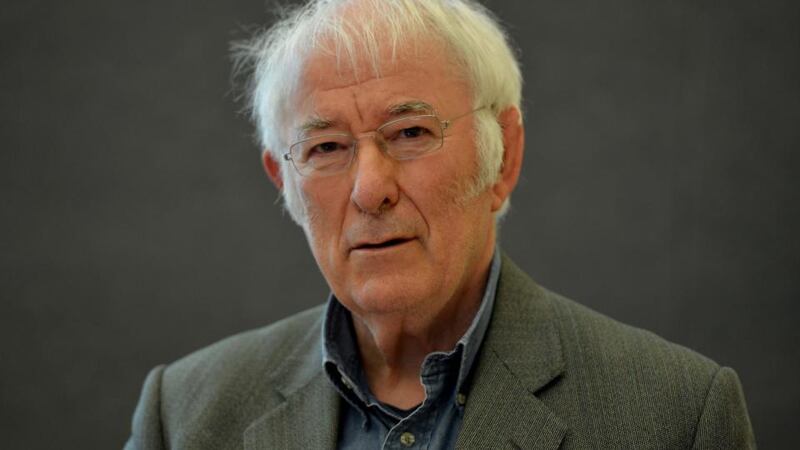
After that school, I went on to study English Literature at Oxford University. Heaney followed, but not his poems. His presence was felt instead from his tenure as professor of poetry, through his literary criticism of John Clare, to his translation of Beowulf.
Here, I discovered that an Irish writer could be recognised as world-class, not only for his own work, but also for what he had to say about English literature. Before, I had felt it was a tradition that did not quite belong to me as an Irish person. But I realised that English literature is one that the Irish have made our own.
I have since moved to London, using the District Line for my daily commute, living with the “tunes from a tin whistle underground” that Heaney wrote of in District and Circle. And, at this point, I expect, wherever I go, that Heaney thread might persist.
Hugo Harvey left Cork in 2007 and has since lived across France and the UK. He is now a freelance writer and presenter working in London. He has interviewed political figures like Zack Polanski and Noam Chomsky for his YouTube channel.
- Are you Irish and living in another country? Would you like to share your experience with Irish Times Abroad, something interesting about your life or your perspective as an emigrant? You can use the form above, or email abroad@irishtimes.com with a little information about you and what you do. Thank you
- Follow us on Instagram to keep up with the latest
- Sign up to The Irish Times Abroad newsletter for Irish-connected people around the world. Here you’ll find readers’ stories of their lives overseas, plus news, business, sports, opinion, culture and lifestyle journalism relevant to Irish people around the world.