At a time when the cost of living and sustainability are competing for attention, one classic is bringing the two together in an innovative way.
The Government wants more cars on Irish roads to be electric. That makes a lot of sense, but there are barriers to entry, not least the cost. That’s where an old solution may provide a new fix.
Citroën launched the 2CV back in 1948 with the goal being accessibility. Not only was it cheap to buy, it was designed to reduce costs for users. The total cost of ownership was factored in, with the aim being to make cars – old-school fossil-fuel-using cars – more accessible to everyone.
The last 2CV left the production line in 1990 as it was overtaken by market forces and greater competition. Now, in the electric era, an old friend is making a comeback.
READ MORE



If the original 2CV was socially transformative, Citroën is out to replicate its effect in the electric car market. With most models being heavy and too expensive to encourage enough drivers to make the switch, the French car maker is out to upend the market with simplicity.
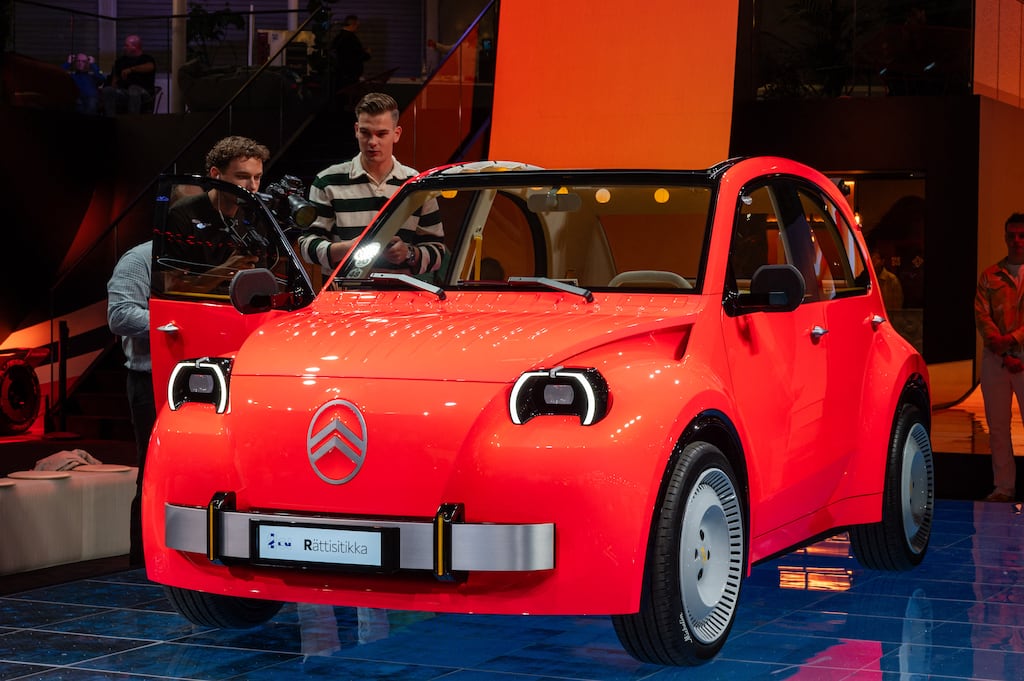
It’s not just a nostalgia play. Citroën unveiled the new model at the recent Paris Motor Show with plans to have it in showrooms by 2028, selling for just €15,000. That’s a price point going to attract a lot of attention.
Electric cars as we know them today are marketed heavily on the bells and whistles that go with them, which involve a lot of computing power and screens. The 2CV, as one might expect, isn’t going down that route.
The plan is for the car to be substantially lighter than the norm, which will mean less energy is required for usage. That facilitates the use of a smaller battery to further reduce the weight. This also means it won’t need to use as much in the way of critical minerals, which would otherwise add to the cost.
Citroën is not the first French car-maker to embrace the past with its electric cars. Renault’s 5 E-Tech is a reimagining of the old Renault 5, another car that was aimed at a wider audience. As it happens, the chap who drives me to and from the pub after going to UCD football games has one, and he’s quite impressed with how much he’s saving as a result.
Yet it still feels like it has more than is necessary to be considered a truly budget option. The more that can be stripped down, the more the gains compound due to reduced weight and the subsequent power requirements.
The electric transition needs cars people can afford. The costs don’t stop once the list price has been covered. That’s why the reimagination of the 2CV, a car targeted at the budget-conscious, is so intriguing.
[ Which EVs won’t make me feel carsick?Opens in new window ]
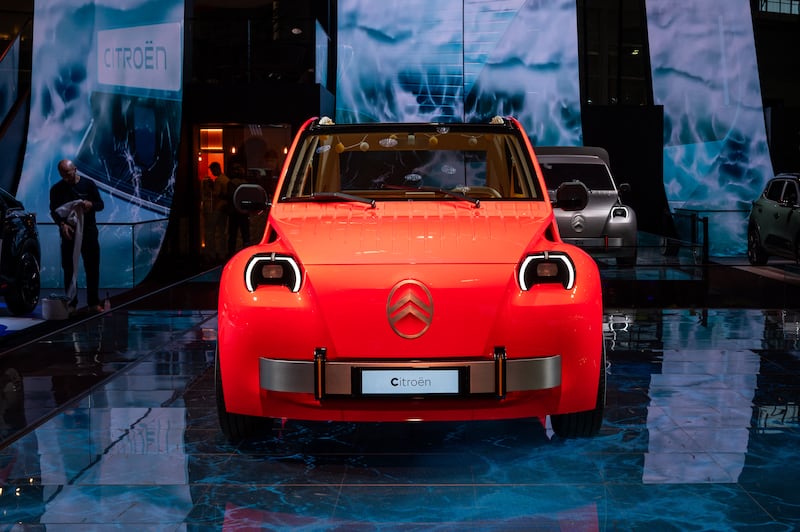
The Renault 5 E-Tech has a list price of over €26,000, which is hardly terrible, yet what Citroën is proposing is a vehicle €11,000 cheaper. That’s a price point likely to make newly purchased electric vehicles available to a much wider market.
There will obviously be some snobbish mockery; the original 2CV is far more fondly commented on today than in its pomp. When looking to the past for inspiration, there’s also the natural risk that the market has moved on.
Yet I’m confident this can be different. While the original car was designed with farmers in mind, the 2CV was adopted by hippies and counterculturalists as well. Both of these groups could easily be the target markets for the electric version.
The latter group is obvious given that an electric 2CV is the four-wheeled ideal for the eco-conscious. Yet those working in rural areas might well prove just as valuable a market.
When it comes to farming, practicality is paramount. If it works and gets the job done, it’s a winner. If it doesn’t, then it gets left aside. The 2CV was designed with such simple practicality in mind, reducing complications so that it could just work.

These aren’t exactly the most hopeful times in technology. We can barely go a day without a new story about some terrifying way artificial intelligence has been misused, or a new major hack. Even supermarket fridges are no longer safe from cyber threats these days.
That the 2CV, which was born from the postwar slump in Europe where times were tough, could be a shining light in the darkness is truly wonderful.
Citroën isn’t trying to sell the fanciest machine with the most features, yet the car maker has proposed something truly innovative. It’s selling simplicity.
[ Just €109,000 of €3.9m overpaid to car dealers for EV scheme has been recoveredOpens in new window ]