

“Turning and turning in the widening gyre, The falcon cannot hear the falconer;
Things fall apart; the centre cannot hold; Mere anarchy is loosed upon the world.”
WB Yeats’s powerful imagery, written in 1919 following the Great War, resonates strongly today. In society, and in politics, we are seeing and hearing things which would have been utterly unimaginable, unconscionable, not so long ago. The verse is also apt for what is happening in rugby union. South Africa v New Zealand, the Rugby’s Greatest Rivalry series, confirmed issues which many have feared for quite some time.
Firstly, the physicality. It was pure attritional brutality, which is rugby’s norm nowadays. Serious brain and skeletal injuries are greeted with little more than a shrug, the accepted price of playing a game of huge non-stop collisions.
READ MORE

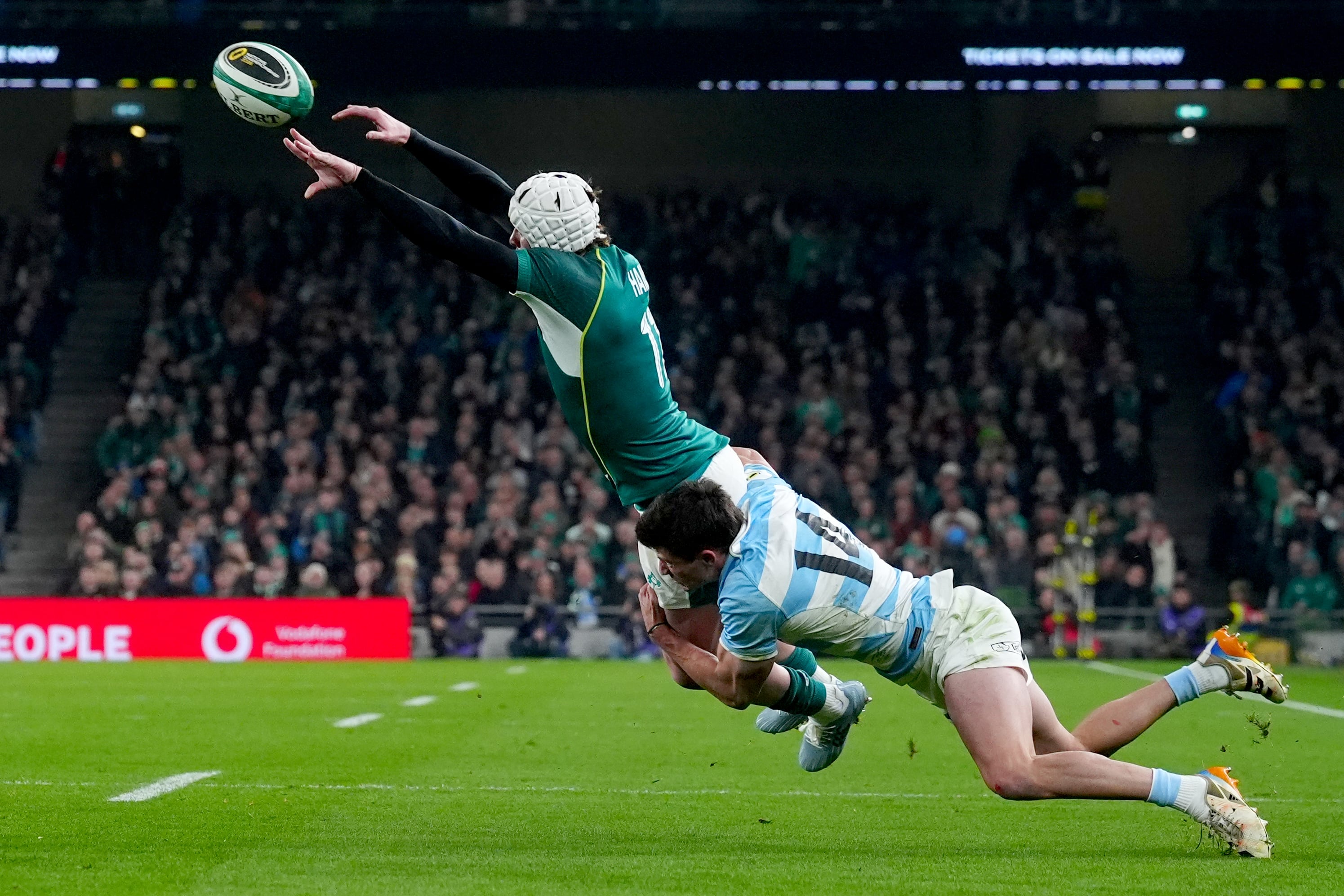


Failed HIAs in the opening match led to three players being unavailable for the second Test. In the third match Ardie Savea was savagely cleared out by Malcolm Marx, which strangely was not reviewed. The New Zealand captain sustained a serious shoulder dislocation and surgery was required. Cheslin Kolbe left very early with a broken jaw – more surgery. Quinn Tupaea also departed – knee ligament damage – but has so far fortuitously escaped the scalpel.

South Africa bring ferocious non-stop intensity to the table. Huge starting 15s are aided and abetted by a big bench, and probably the two best frontrows in the game. While others might not like it, South Africa are quite entitled to play to their strength, but that doesn’t mean they are unbeatable. Les Kiss’s Australia – down to 11 men at one stage – demonstrated that on Sunday.
Four yellows to one team is rarer than me enjoying a long-distance flight, but did referee Andrea Piardi get these right? Two were for head-on-head tackles, and those can’t really be argued. Another was following a penalty try; that’s in accordance with established protocol, like it or lump it. But the card for Joseph-Aukuso Sua’ali’i was plainly wrong in my reading of it. Called in by assistant Ben O’Keefe, it was exceptionally severe and not obvious at all that the player was actually offside. So, three cards were obvious, and the one that wasn’t clear shouldn’t have been given.
The South Africa v New Zealand series also demonstrated an unwelcome, unacceptable split in how the game is refereed. Contests for possession are the unique identity of rugby union, its essential heartbeat. However, Super Rugby Pacific refereeing favours the team in possession to such an extent that it is becoming increasingly difficult to get the ball back.
Teams must be allowed opportunities to contest for the ball, to regain possession. These are crucial contests, which do not exist in rugby league, where a team must hand it over to their opponents after six tackles, so that the others can “have a go”, so to speak. Is that really what World Rugby wants? Because that’s where it’s heading.
A core principle of union is being left behind, forgotten: that continuity of play is not, repeat not, continuity of possession. And, unsurprisingly, lineout illegalities continue unabated. Teams flout the law, unhindered by fear of a sanction.
The first South African try in the second Test was a case in point. Angus Gardner is not alone in meticulously setting up the lineout, and then ignoring the law completely – it’s an absurd farce. Siya Kolisi took up position as receiver, so we knew what was coming. As the ball was thrown, several team-mates immediately left the lineout, which is expressly forbidden. They joined Kolisi to set up a powerful maul, which travelled about 20 metres before the outstanding Jasper Wiese broke off.
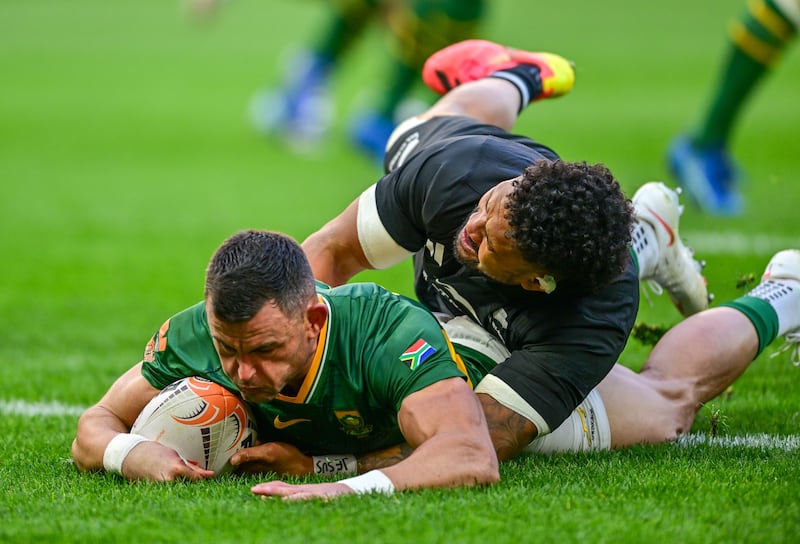
When Wiese was tackled a team-mate straddled on all fours over him, protecting possession. This straddling is not as blatant as a player throwing himself on top of the ball carrier, but is just as effective in preventing a fair contest. There was much the same at the next tackle as South Africa recycled the ball, before Jesse Kriel scored. And, to add insult to injury, there was a South African block on a New Zealand defender.
South Africa’s second try came from a similar maul driven, once again, around 20 metres. This “double-banking” maul formation raises a simple, fundamental question: Who gave permission for teams to action it and for referees to ignore it?
New Zealand, to avoid a contest in the lineout, occasionally tossed the ball in quickly, directly to their front man. It’s hardly a throw-in, more of a pass, really. In a fully formed lineout it is beyond belief to see how it can be construed as a legitimate, contestable throw. But, heck, who gives a damn?
More differences at scrum time. Gardner, not anxious to penalise, reset frequently. One scrum was reset four times, before a free kick on the fifth engagement. In contrast, Nika Amashukeli and Karl Dickson adopted a sanction based approach in the third and fourth tests. The Georgian was into the second half before he called a reset; until then the scrums had either been good, or had been sanctioned.
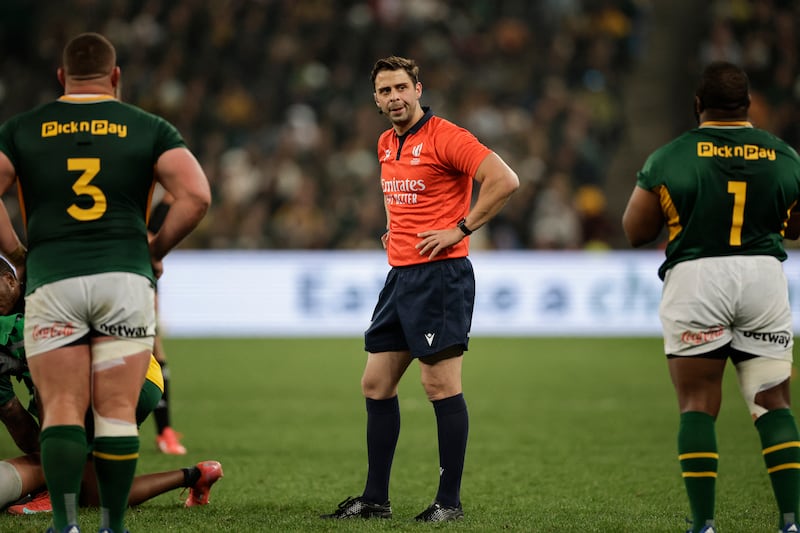
Amashukeli is very hot on sealing the ball-off and side-entry, and his reputation obviously preceded him. South Africa’s breakdown behaviour was markedly different under his watch, much more compliant in staying upright. As part two of the Nations Championship looms ever closer, Andy Farrell doesn’t need me to tell him that absolute clarity is needed as to exactly what is what.
The laissez-faire policy is widespread down under, a virus which cannot be allowed to spread, despite what Australia and New Zealand might wish. These two unions hold immensely powerful World Rugby positions in chairman Brett Robinson and Mark Robinson (no relation) in a newly created chief-of-rugby role.
Is there any chance that they will work to deliver a game which is played in accordance with its laws and charter?
Despite the chairman’s reassuring words earlier this year, I remain concerned at what will be proposed after the fast-approaching World Cup. There is every possibility of a boardroom battle royal on the way. The northern hemisphere unions, and South Africa, will not roll over in placid acceptance.
If necessary, they have the means to turn Yeats’s imagery around. They can ensure the centre holds.