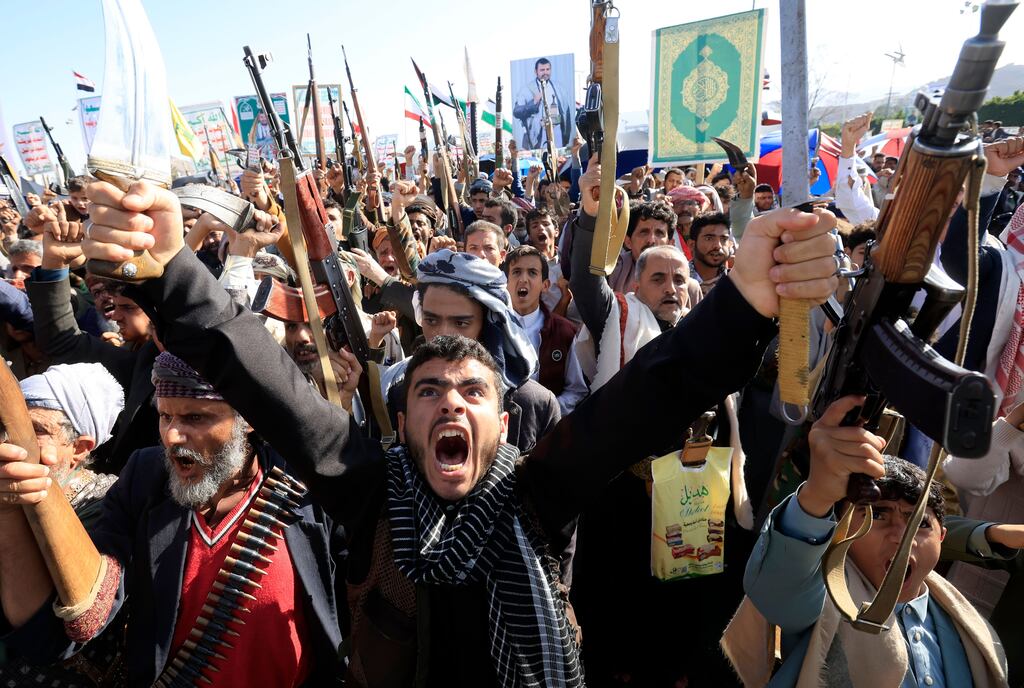
On October 10th, a missile attack on King Khalid International Airport in Riyadh, launched by the Yemeni Houthi movement, killed 13 people and injured hundreds more. This was followed the next day by another attack, this time on King Fahd International Airport in Dammam in the east of Saudi Arabia. Previous attacks in September targeted fuel tanks at the airport in Riyadh, destroying a passenger plane and damaging several others. The attacks raise the obvious likelihood of Saudi retaliation with the concomitant danger of escalation into wider conflict in a region that has known little else for years.
The attacks must be seen within the broader Yemeni context.
The Houthi movement – a Shia Zaydi militia – came to power in Yemen in 2014 when they seized control of the capital, Sana’a, from the internationally recognised government that followed the fall, three years earlier, of the country’s long-time autocratic ruler, Ali Abdullah Saleh. In response to the expanded influence of an Iranian ally on its southern border, Saudi Arabia, under the effective leadership of Crown Prince Mohammed bin Salman, led a coalition to expel the Houthis.
However, things did not go according to plan, and the war was effectively stalemated by the time a ceasefire was agreed in 2022. Since then, both sides largely refrained from major escalatory actions, and the level of conflict remained low until earlier this year.
READ MORE


The Houthis responded to Israel’s war on Gaza with attacks on Israeli shipping and on Israel itself. These were met with air strikes by the US, the UK and Israel, followed in May of last year by a ceasefire agreed between the US and the Houthis. However, this was limited to these two sides. In July 2026, an Iranian plane carrying a Houthi delegation that had attended the funeral in Tehran of Iran’s supreme leader, Ali Khamenei, was attacked at Sana’a airport. The Houthis blamed Saudi Arabia, and a series of tit-for-tat attacks ensued. In late July, the Houthis announced a maritime blockade of Saudi Arabia and later attacked two Saudi oil tankers. The Saudi response prompted Houthi attacks on a Saudi oil refinery and the port of Yanbu – the first direct Houthi attack on Saudi territory since 2022.
In early September, the Houthis seized control of the Red Sea port of Mokha from Yemeni government forces, giving them a foothold close to the Bab al-Mandab Strait, through which approximately 10 per cent of global oil supplies transit.
The advance of the Houthis alarmed the Saudis for several interlocking reasons. Saudi Arabia has been more reliant than ever on access to Bab al-Mandab since the effective closure of the Strait of Hormuz, following the outbreak of war between the US, Israel and Iran earlier this year. Equally alarming to Riyadh is the close alliance between the Houthis and Iran, which means that Tehran now has the potential to control the two most important chokepoints for the transit of global oil supplies from the region.
The advance represented a military setback for the Saudis and the forces they support in Yemen. For the Houthis, the renewed fighting constitutes part of a strategy to force new concessions from opponents inside and outside the country in any future negotiated settlement to end the conflict. The Houthis want recognition of their sovereignty over the territory that they control in the north of Yemen. In the broader region, they have exploited the war in Gaza to enhance their status as a key element in Iran’s “axis of resistance”, having demonstrated their capacity to disrupt the transit of oil and other goods.
The dilemma facing the Saudis now concerns the possible impact of further escalation of conflict. The Houthis have survived air strikes by Saudi Arabia, the United Arab Emirates, the US, UK and Israel in recent years and appear to have emerged stronger in many respects. They control mountainous territory across which fighters and weapons are dispersed, with the capacity to threaten major oil infrastructure and shipping routes. While there is uncertainty regarding their stock of weapons, some reports suggest that they possess an array of missiles and drones that can reach the Gulf States and Israel. A report in 2024 by a UN panel of experts documented extensive links between the Houthis, Iran and its regional allies. Iran denies arming the Houthis, which would be in breach of a UN embargo. However, the panel of experts found that support from Iran, as well as Iraqi militias and Hizbullah, had transformed the movement. According to the report, the number of fighters increased from some 30,000 when the war began in 2015 to an estimated 350,000 today.
For Saudi Arabia, its enormous expenditure on the military cannot guarantee complete protection from Houthi missile attacks. The threat to the Saudi economy is clear. The most recent attacks coincided with its hosting of a major international energy summit from which the chief executives of ExxonMobil, Shell and TotalEnergies were missing.
The US also faces a dilemma in determining its response to the attacks. Having declined an earlier invitation by Mohammed Bin Salman to launch air strikes on the Houthis in September, president Donald Trump now appears to be shifting position. He described the attack on Riyadh airport as “not acceptable” and stated that he would “look at” the possibility of joining air strikes. The Houthis, in turn, have made clear that this would end the ceasefire with the UN and vowed “a swift and painful response targeting the US and all its interests in the region”.
US intervention could lead to a halt in shipping through the Bab al-Mandab, further restricting the flow of oil from the Gulf. Over the last two months, in advance of midterm elections in the US, Trump has sought to blame Ukrainian president Volodymyr Zelenskiy for rising oil prices in an attempt to evade responsibility for the economic consequences of US involvement in conflict in the Middle East. However, if the US becomes further embroiled in conflict in Yemen, he may find it more difficult to escape the consequences of his war of choice on Iran.
Dr Vincent Durac is an associate professor in Middle East politics at University College Dublin


