
Born May 23rd, 1963
Died September 6th, 2026
“In September 2022, when most of the world was watching Ukraine on the news, James MacGuill got on a plane and came to see us,” wrote Valentin Gvozdiy, a Ukrainian advocate, on learning of the death of the Irish solicitor and senior counsel.
As president of the Council of Bars and Law Societies of Europe, MacGuill travelled to Mukachevo to sit with the Bar Council of Ukraine “in person, in wartime, to discuss how lawyers keep defending people when the country itself is under attack”, said Gvozdiy.
READ MORE


“He simply believed that if Ukrainian advocates were doing their job under fire, European colleagues should stand next to them, not send messages from a safe distance.”
The Ukrainian advocate’s heartfelt tribute to his friend was among many paid to MacGuill following his death earlier this month after a short illness. He was 63.
MacGuill was one of five children born in Dundalk, Co Louth to Comhghall MacGuill, a solicitor, and his wife, Maeve, an educational psychologist.
He was educated at St Mary’s College, Dundalk, and later University College Cork, graduating with a law degree in 1983. He was admitted to the roll of solicitors in 1986.
He joined his father in the family practice, later succeeding him. The mixed practice involved considerable criminal defence work, including cases affected by the Troubles.
MacGuill’s lifelong commitment to human rights law and scepticism of State authority was influenced by his abhorrence of behaviour of certain gardaí and prosecutors. He labelled a senior garda whom he regularly battled with as the “prince of darkness”.
As managing partner of MacGuill and Company, he specialised in litigation, with an emphasis on public law, especially criminal law.
“He strongly believed everyone, without exception, is entitled to a defence, and the best possible one,” said Ken Murphy, a friend and former director general of the Law Society.
MacGuill undertook several landmark cases, including for a former senior IRA member, Brendan “Bik” McFarlane, who won a significant battle with the Irish State in the European Court of Human Rights.
McFarlane was charged in the Republic in 1998 with kidnapping supermarket executive Don Tidey in 1983. As commander of IRA prisoners in the Maze prison during their 1981 hunger strike, McFarlane had led the mass escape from that prison in 1983.
In 2010 he won a declaration from the ECHR the State proceedings against him had taken too long and he was entitled to compensation. The State paid €15,000 damages and legal costs and his victory was all the sweeter for MacGuill because he had taken on a State legal team headed by the attorney general and representing the cream of the Irish Bar.
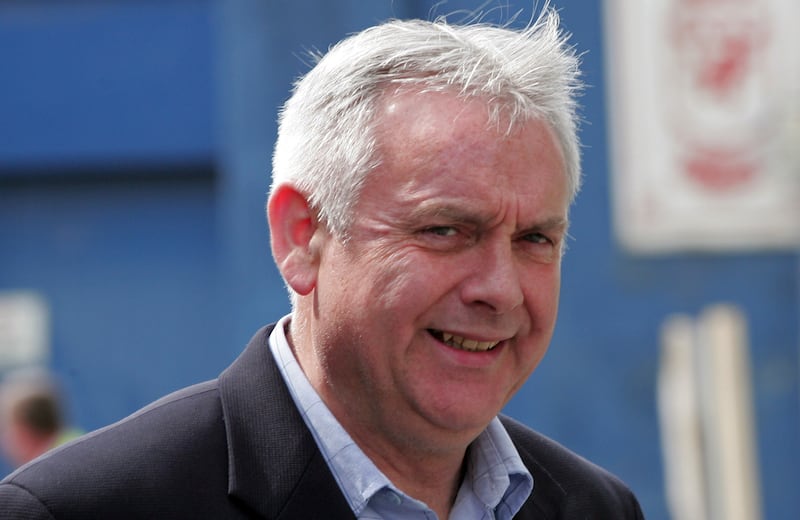
Another client, Yusuf Ali Abdi, who spent 16 years in prison before his murder conviction was overturned, never forgot the solicitor who stood with him. In a message of condolence on MacGuill’s death, Abdi said: “I am glad to have you in my corner.”
An asylum seeker whose father was murdered during the civil war in Somalia, Abdi was convicted in 2003 of the murder of his infant son in April 2001 after a prosecution psychiatrist disagreed with defence experts he was suffering from paranoid schizophrenia.
At a retrial, ordered following an appeal, the prosecution psychiatrist accepted that, in 2003, Abdi may have shown signs of mental illness and had a history of paranoid schizophrenia.
Abdi was found not guilty by reason of insanity and the Court of Appeal later upheld a miscarriage of justice finding, entitling Abdi to seek compensation from the State.
More recently, MacGuill won a significant victory when representing an African couple at the centre of the first ever criminal prosecution here for female genital mutilation.
Those proceedings concluded last June as a declared miscarriage of justice, based on new medical evidence the couple’s young daughter was never subjected to the procedure.
MacGuill notched up another big win when he took a test case on behalf of a man who suffered injuries after a violent assault but was offered just €645 compensation under the State’s criminal injuries compensation scheme.
After the Court of Justice of the EU last year upheld the Irish High Court decision that the scheme unlawfully excluded compensation for pain and suffering, the State paid the man damages estimated about €60,000 and announced reforms aimed at bringing the Irish scheme into line with European law.
Although he was a tough opponent in court, MacGuill had the same approach to law as to rugby, a sport he loved and had played enthusiastically. Once a case concluded, he would, as Circuit Court judge and former solicitor Simon McAleese put it, “leave everything on the pitch”.
MacGuill was actively involved in the Law Society, the solicitors’ representative body. He chaired its criminal law and human rights committees and served as its president in 2007-2008. In 2022 he served as president of the Council of Bars and Law Societies of Europe, the only Irish solicitor to be president of both bodies.
MacGuill particularly despised lawyers whom he considered had embarked on a legal career with the primary aim of enriching themselves.
Some colleagues affectionately referred to him as “Comrade MacGuill” because of his strong belief in solidarity. He was seen as politically to the left, an Irish nationalist, an internationalist, and not typical of the Law Society establishment.
He was the only Law Society president who invited Sinn Féin leader Gerry Adams as a guest to the presidential suite at Blackhall Place, a colleague recalled. “That caused some to reach for their smelling salts.”
When appointed president, MacGuill summed up for the Law Society Gazette his own motivation for entering the profession: “The greatest satisfaction for me in being a solicitor is where your client is the person against whom all the odds are stacked – but has justice on their side.”
Many clients involved in complex cases appreciated his dedication. Mary Kavanagh, in a condolence notice, recalled MacGuill’s work over years on behalf of her and three other Co Louth residents when they took legal action against British Nuclear Fuels over the nuclear reprocessing plant at Sellafield, whose discharge pipeline was directly across the Irish Sea from the Cooley peninsula.
“He was always totally prepared and well informed on the complexities of our case, and assured and confident when we were facing into yet another court appearance ... Exactly the guy you wanted in your corner. He was a charming man and remained passionate and committed to our case throughout the many years it ran and for that we owe him a big thank you.”
A retired Garda detective, Maurice Downey, posted a condolence recalling dealing several times with the “capable and caring” MacGuill over cold cases in Ireland and abroad.
In 2020 MacGuill’s skill as an advocate led to him being one of the first Irish solicitors to be granted the title senior counsel by government.
Friends and colleagues particularly highlighted his assistance and kindness towards aspiring lawyers starting out on their careers.
Outside the law, MacGuill was an adoring father and best friend of his son, Conor. He was a bon viveur, opera lover and great wit. As Ken Murphy put it, he was a man who “licked the lid of life” and was “always happiest when he was not part of the establishment”.
MacGuill is survived by his son, Conor Kirby MacGuill; his brothers, Colm, Ciarán, Daire and Conor; and his sister, Eithne.


