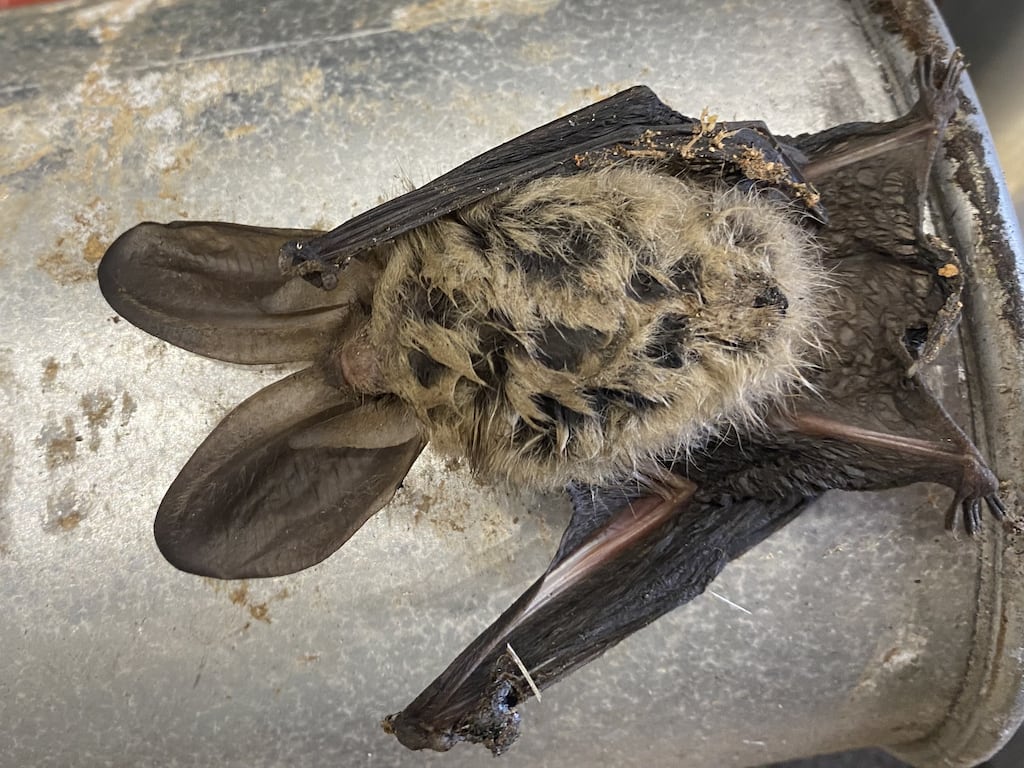
This little chap was on the floor of my workplace for a day before we concluded that he had gone to meet his maker. What type/species of bat is it? Leo Ó Seanáin, Droichead Nua
Your excellent photo shows a brown bat whose ears are three-quarters the length of the head and body combined. What great use of the imagination therefore to call this the brown long-eared bat, Plecotus auritus. In fact, in life when the bat is at rest, the ears are tucked under the wings and are less obvious. But your specimen is truly aimsir chaite so the ears are on display in all their glory.
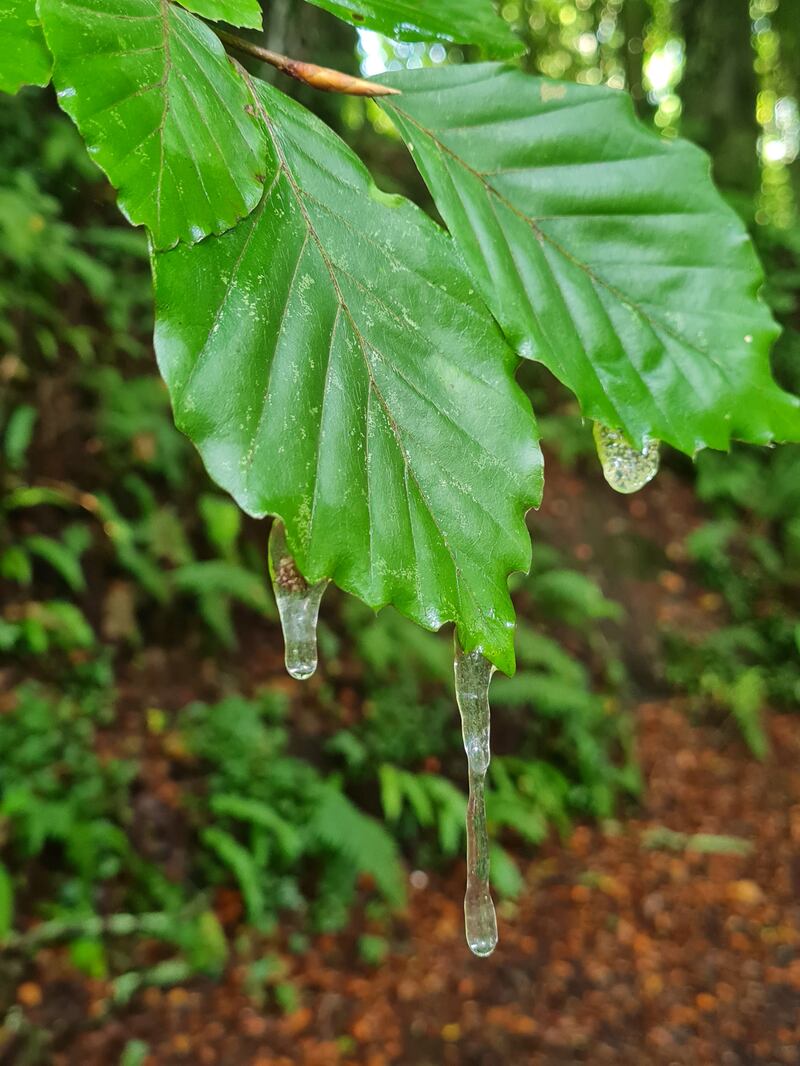
I spotted this strange clear gooey substance hanging from the leaves of a beech tree in a wooded area in Limerick. You can clearly see a ball of what I presume are eggs inside some of them. Can you tell me what it is? Vivienne Kiernan, Limerick
I consulted with the Irish expert on caddisflies, Jim O’Connor, for this one. These are egg masses of the caddisfly Glyphotaelius pellucidus. The caddis is predominantly found in ponds, ditches and slowly flowing streams, especially those that dry up totally or partially over summer. When mature, the jelly liquefies, often activated by rain or dew and has been described – charmingly – as tree snot. The little larvae then drop directly into the water, where they start to make cases for themselves. The larvae eat tree leaves and make very distinctive-looking cases of discs of leaves. The species is very successful and is widely distributed in Ireland and the rest of Europe.
READ MORE


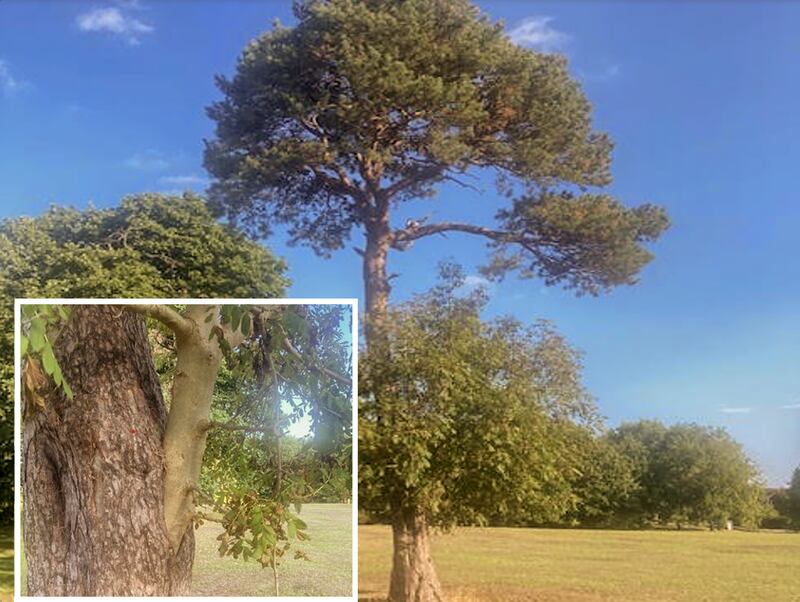
In my local park there is this interesting bonding of two trees, a Scots pine and an ash. Is there a special term for this? Ken Mawhinney, Balally, Co Dublin
The seed of the ash – which is windborne – must have dropped into a cavity in the pine tree where there was decaying wood, which acts like a compost. The two different trees do not graft together. The ash is an epiphyte growing on the pine, but it is not in any way parasitic on it.

I was recently reminded of my country childhood when I met this little fellow as he strolled along the sink outlet pipe in the sun. The roadsides were alive with the whirring and leaping of grasshoppers in my distant youth. I had forgotten just how much I have missed them. Maybe he has taken up residence and will entertain me in the future. Deirdre Concannon, Raheny
This is the field grasshopper, one of five grasshopper species native to Ireland. They mature in June and July, and adults may live until November. Males produce so-called normal songs to attract females, while rival males near to each other take it in turns to produce songs – a rivals duet as it were. If herself responds, then it becomes a courtship song, which is quite elaborate and different from the normal song. But it is getting quite late in the year now for that sort of carry-on.
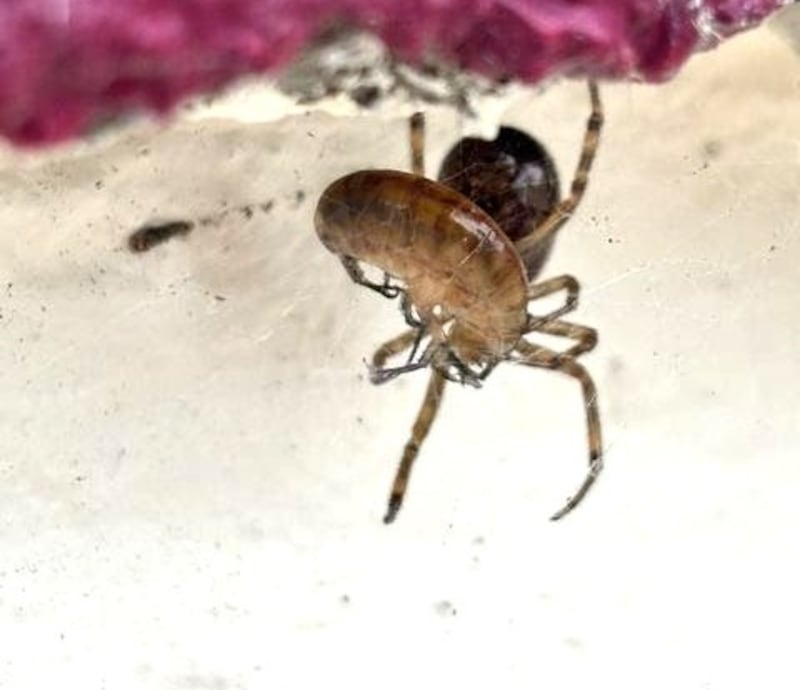
I saw this false widow tackling a sandhopper – Gammarus – on a wall in Courtmacsherry, Co Cork. It was across the road from the beach – I’m intrigued. Richard Hollinshead
Sandhoppers would be far better off if they stayed in their natural habitat among the dead seaweed on the high tide strand-line on the beach. Other readers have reported that they actually can come indoors into houses beside the sea. The false widow spider is a very successful opportunistic carnivore and will have a go at anything. A juvenile lizard and a baby bat are among its recorded prey.
Please submit your nature query or observation, ideally with a photo and location, via irishtimes.com/eyeonnature or by email to weekend@irishtimes.com
Please submit your nature query or observation, ideally with a photo and location, using the form below or by email to weekend@irishtimes.com